Graphic Designer of the Year
Studio Najbrt (Marek Pistora, Michal Nanoru, Aleš Najbrt)
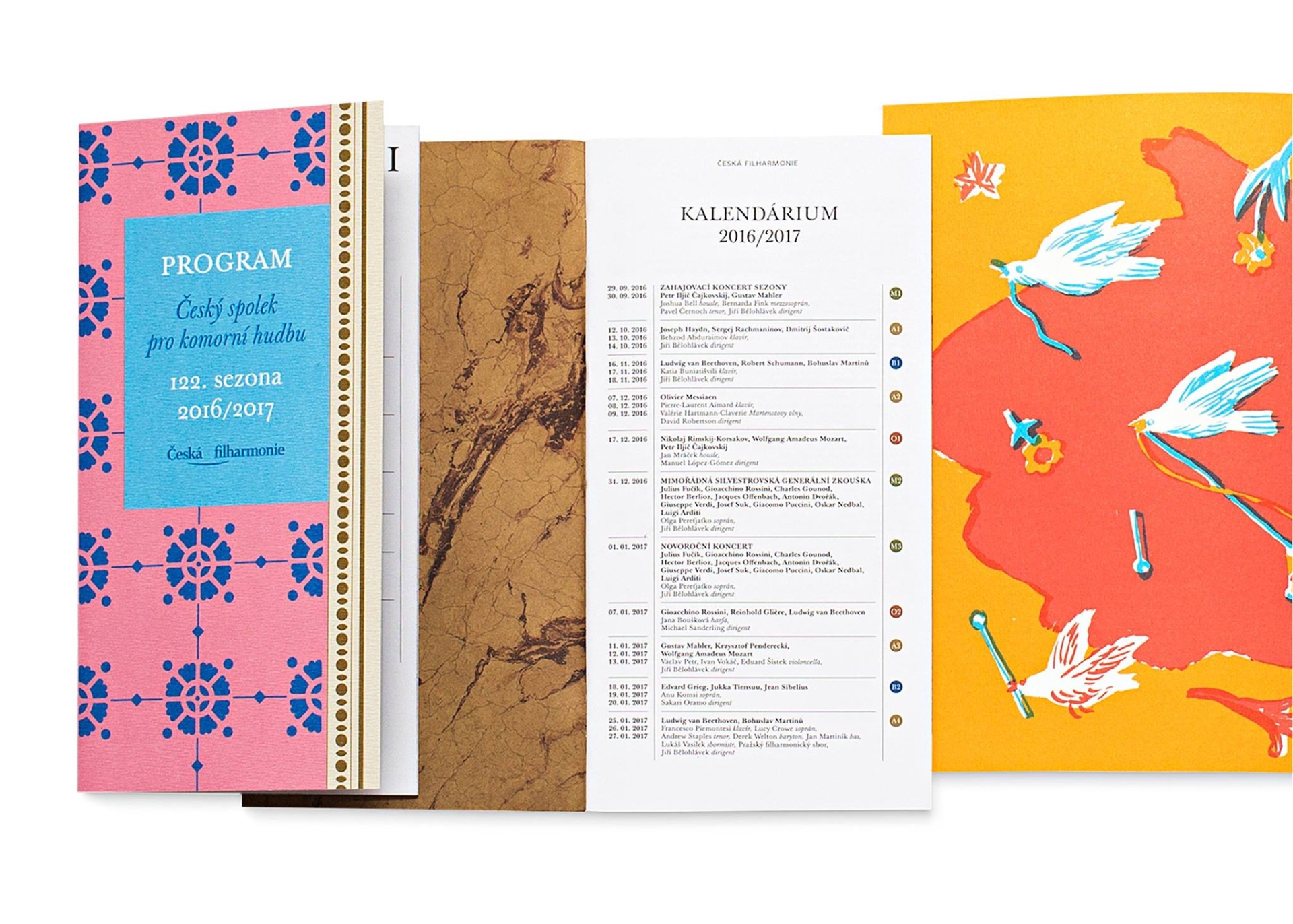
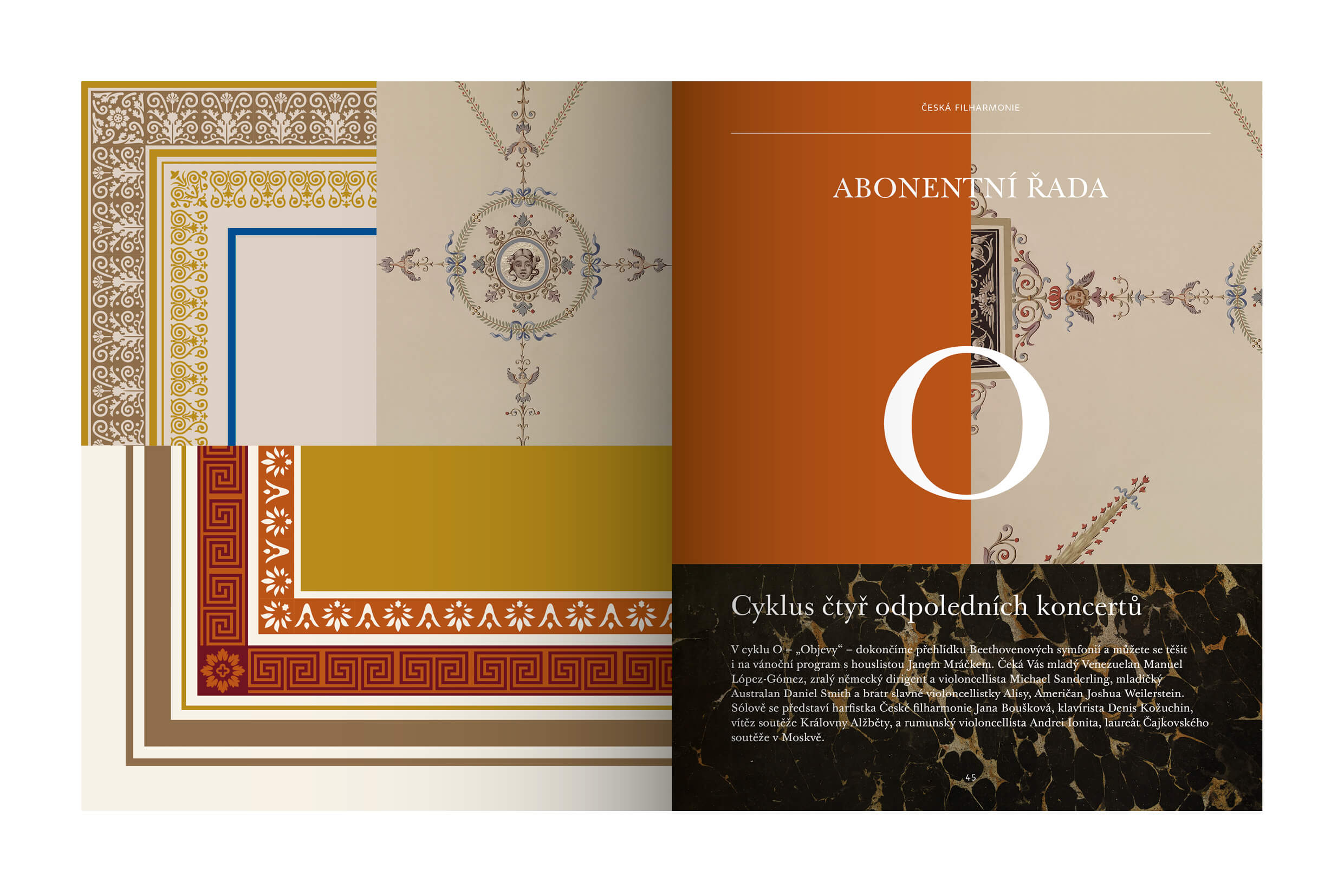
The visual solution of the 2016/2017 concert season of the Czech Philharmonic Orchestra was developed on the concept which Studio Najbrt produced for last year's 120th anniversary of the foundation of this very first Czech ensemble (the authors of the graphic design are Marek Pistora and Michal Nanoru). The open graphic concept, derived from the orchestra's historical cultural renown and its close links with the Rudolfinum building in Prague, finds its individual form in posters, programs, program catalogues and their language versions.
Contrary to the style of the previous season, which only slightly touched upon the aesthetics of the era when the first Philharmonic Orchestra's programs were issued, the most recent style fully employs "both the decorative gluttony and the subtle details of the Rudolfinum's decoration" (see the website of the studio). The applications work most efficiently in the concert hall itself, where the walls and ceilings come alive, freely spill over into the printed brochures and flutter in the programs held in the visitors' hands. Those who are more traditionally oriented can perceive the new visual concept as pleasantly comforting, making them feel that the world here has retained its stability and is anchored in clearly outlined, decorative schemes softly perched in the historical memory. More suspicious visitors, however, cannot fail to see a certain spitefulness with which the ornamental painted decorations, the Classical Antiquity-like and Renaissance grotesques, garlands, mascaron ornaments, amoretti, allegorical figures, but also paraphrased fragments of architecture and other free visual quotes are layered over one another, thus resulting in visual "chords" or, on the opposite, dissonances. The impression of overstatement is evoked by employing various proportions and color scales. Another oscillating element is the degree of abstraction and faithfulness to the model, while the decorative swatch is also directly being disturbed by some contemporary graphic features from time to time, which seems as if it has been incidentally lured from among the literal ornamental references - this is, for example, the case of illustrations by Alexey Klyuykov for children's educative programs.
Pavla Pauknerová