1
Photographer of the Year
Václav Jirásek


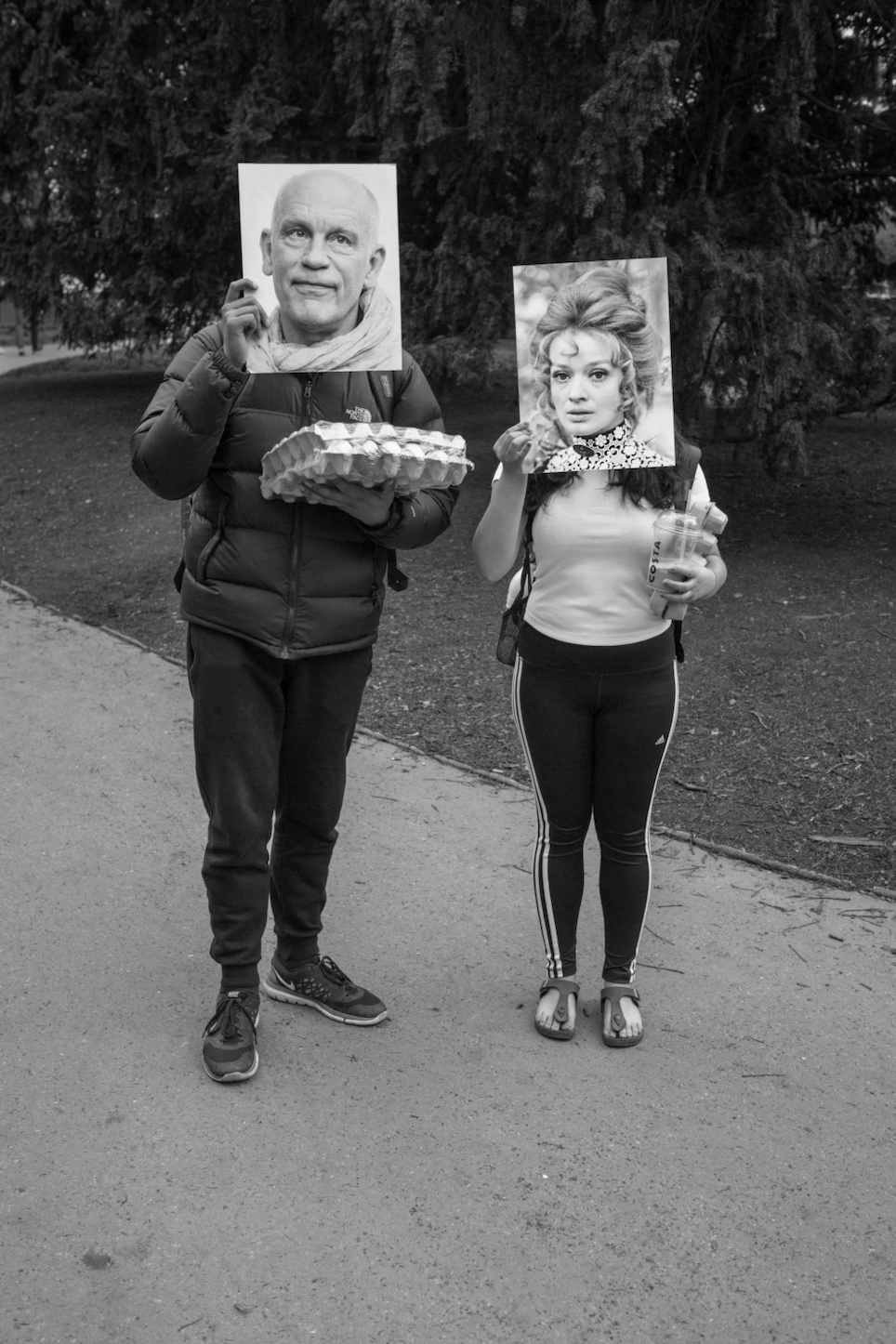
Playing at actors. This is the motif omnipresent not only in Jirásek's photographs taken for the 52nd Karlovy Vary Film Festival, but also in the "permanent" calendar Dramatic Art, devoted to the art group B.K.S. (The End of the World Is Coming). In the first case, unknown people put on photographs of famous faces and indulge in situations such as walking the dog, using public transport or shopping in a convenience store. In the second case, heroes of the National Revival dramas, boasters, Hussites and figures from ancient Bohemian legends along with their gestures full of pathos are exaggerated by thick layers of make-up and costumes all in the spirit of the studio photography practice prevalent at the turn of the 19th and 20th centuries.
A mask as a possibility to completely change an individual, as a tool of transforming a personality as well as a reminder of its anonymity, is one of the crucial motifs found in Václav Jirásek's work. The topical series created for the Karlovy Vary Film Festival, however, turns this principle upside down. While the protagonists of the 2016 posters (also nominated for the Czech Grand Design award) were celebrities escaping the paparazzi lenses, the main actors in 2017 were faceless people begging for viewers' attention while hidden behind a mask. "A famous face works in a similar way as a bold logo," Jirásek says, describing the fast and spontaneous shooting when he set off to distribute the masks – portraits of celebrities – to a group of figurants and chance passers-by. The luxurious logos-faces act here in almost unnaturally civil contexts. The desire to be seen, however, also contains a thrilling paradoxical effect. A mask featuring a famous face in fact enhances the anonymity of its bearer and directly claims: This is not THE celebrity. After all, Belmondo is the last person one would expect to be behind a mask of Belmondo. The guy simply wouldn't be there.
Pavel Turek