Spatial Designer of the Year
Marek Cpin
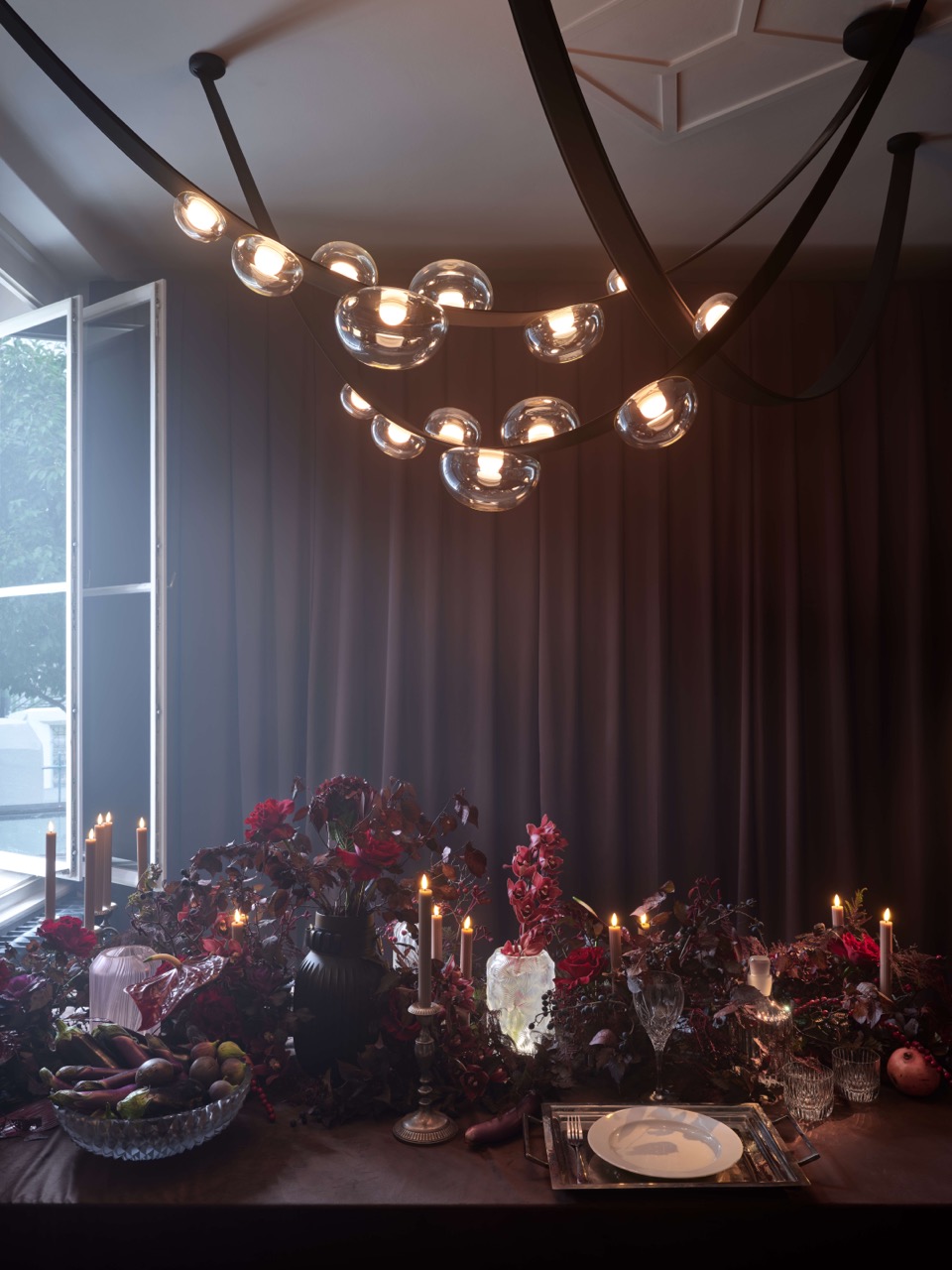
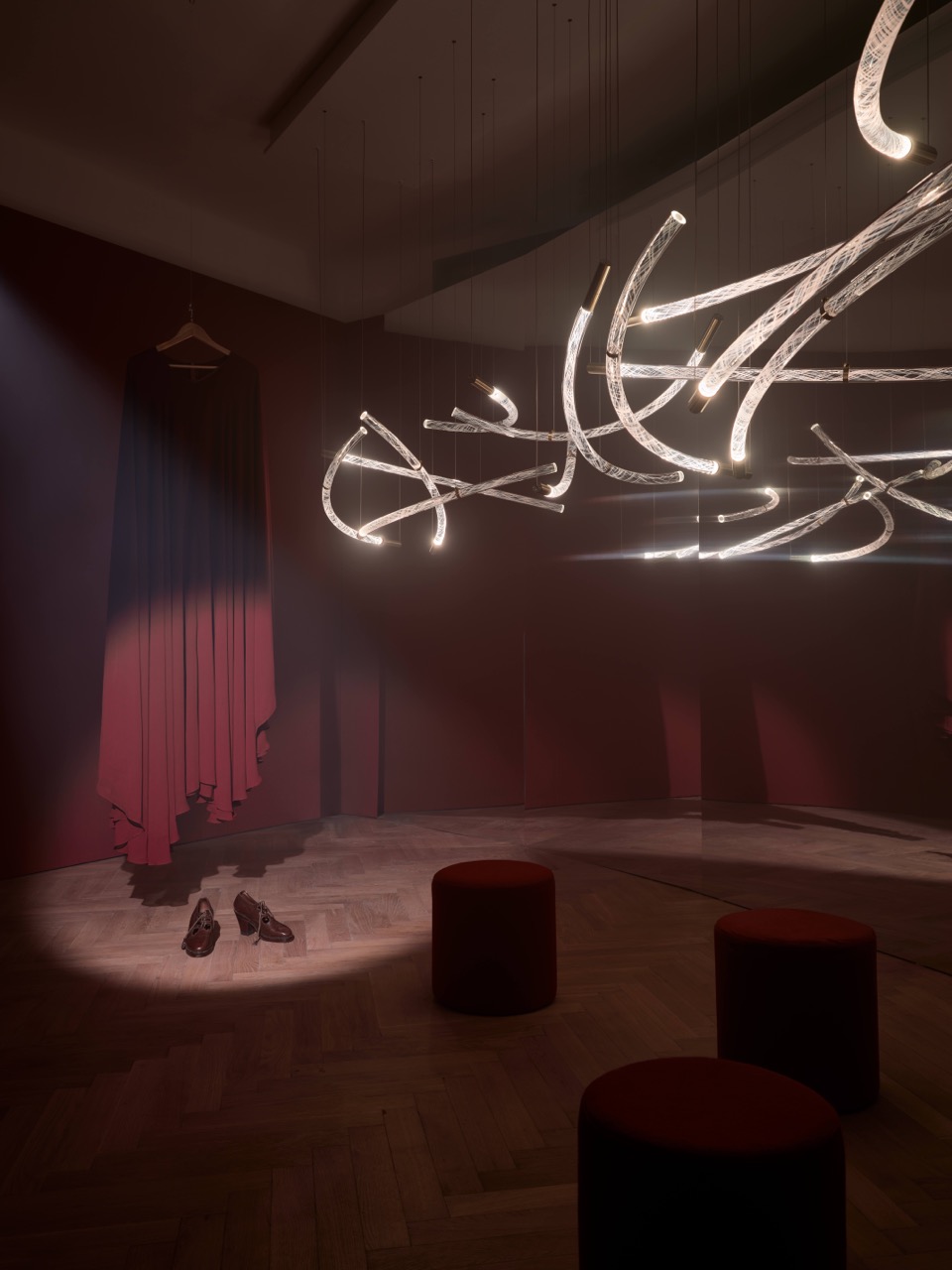
Marek Cpin is a Czech scenographer, architect and artist whose work straddles the border between theater, exhibition design and spatial installations. His work engages with the relationship between body and space, navigates the physical experience of the audience and shows scenography’s ability to create not just visual backdrops but entire situations. Last year’s playful shop windows for Hermès, his long-term client, definitely created a stir, but he deserves the nomination for the Czech Grand Design Awards for his set design for the Cabinets of Reminiscence installation made for Bomma at Designblok 2025, as well as for the exhibition architecture for Institut blízkosti.
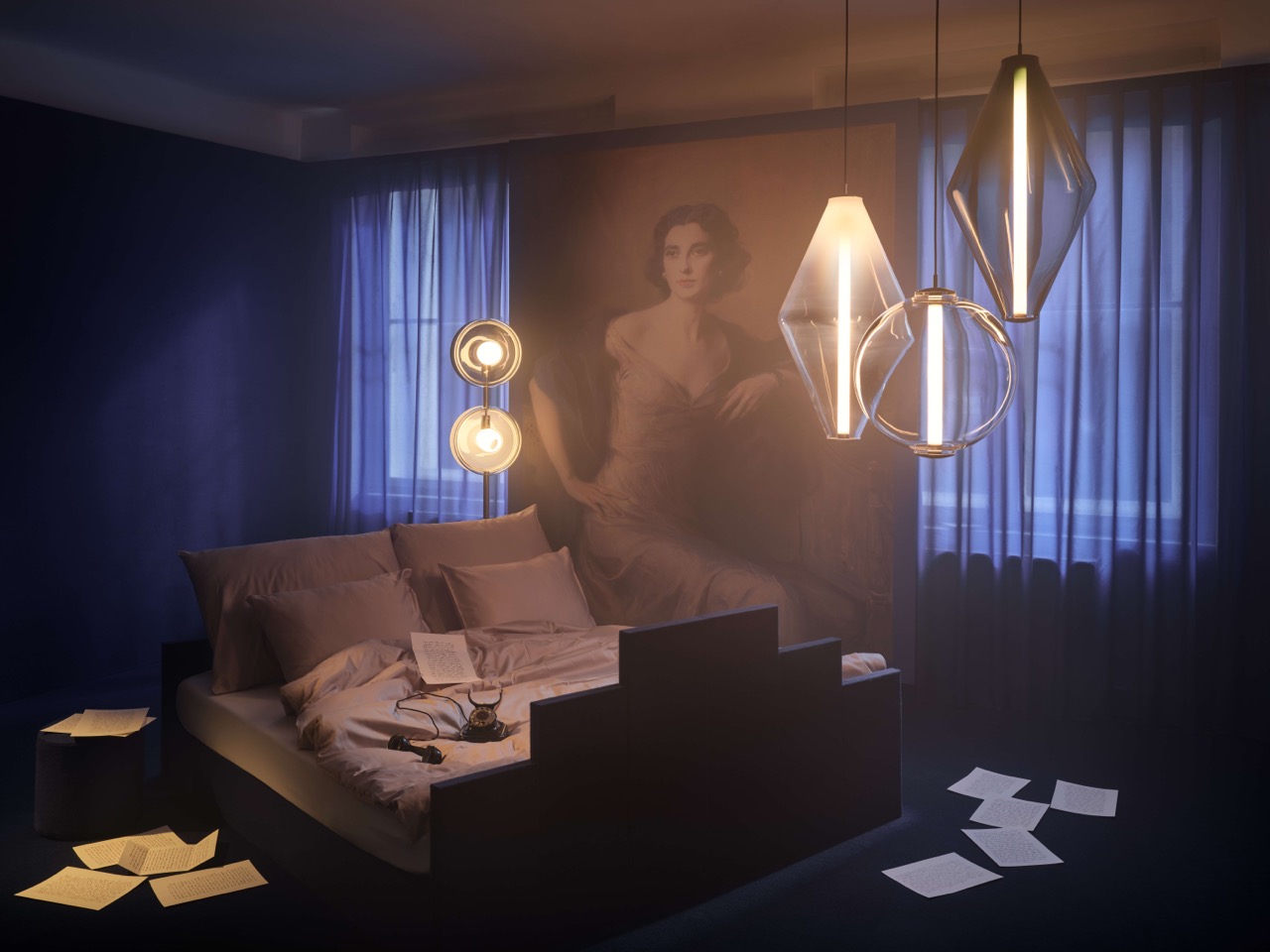
The Cabinets of Reminiscence installation was presented by Bomma and Marek Cpin at Prague’s iconic Kovařovic villa (designed by architect Josef Chochola). Its central motif focused on light, here cast in the role of a silent observer – each of the seven rooms functioned as a “cabinet of reminiscence” and developed the space’s internal narrative through interplay between reality and illusion. Hand-blown crystal lightings by Bomma were set in a site-specific scenography that reacted to the building’s historical interiors and developed a dramatic atmosphere and poetic associations. Each space was designed as a special scene in which light, smell and shape created the illusion of a mysterious labyrinth of memory and images. The visitor’s experience thus develops not only from the aesthetic perception of the lightings themselves but also from the space transformed by Cpin into a scene of emotion and sensorial experience.
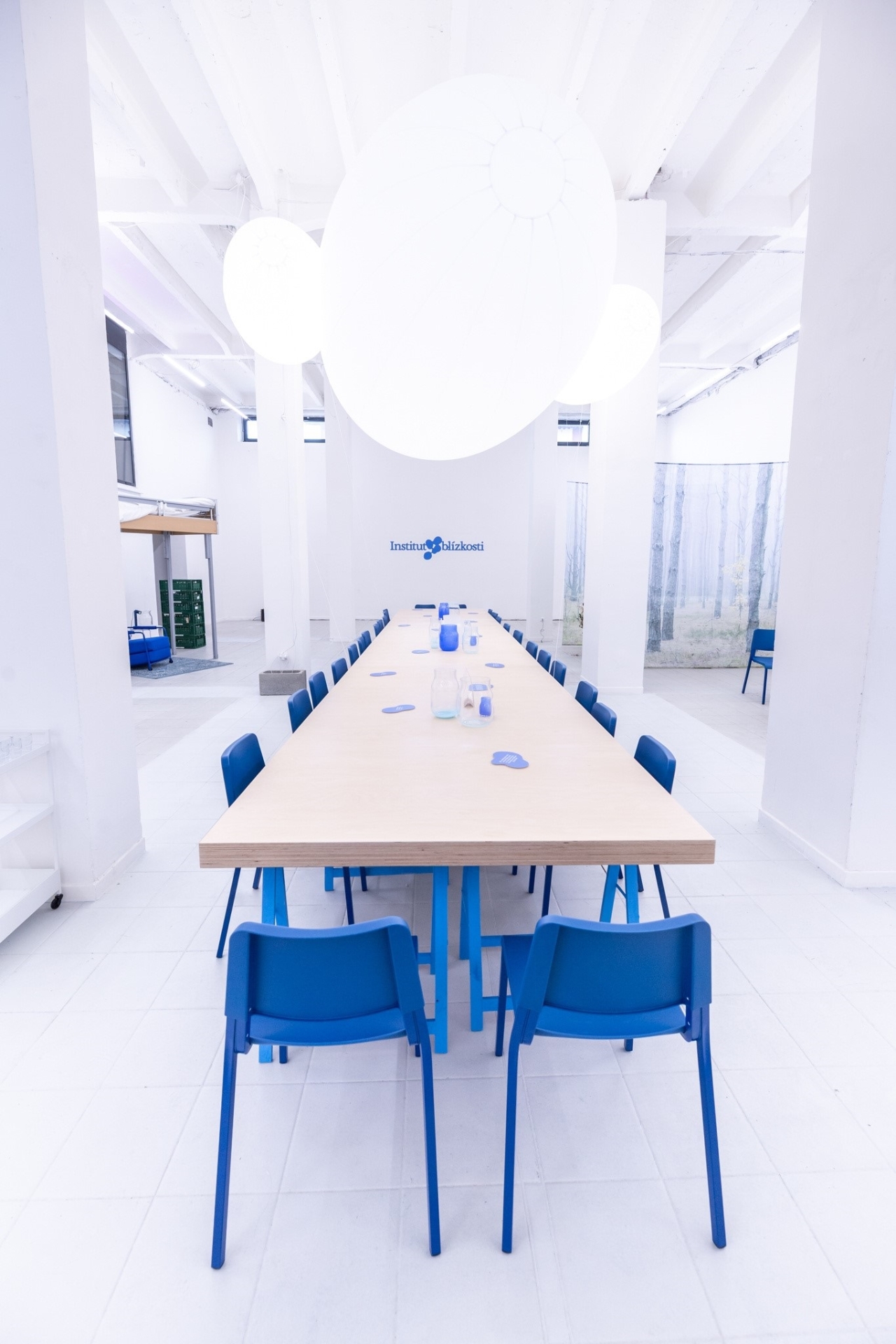
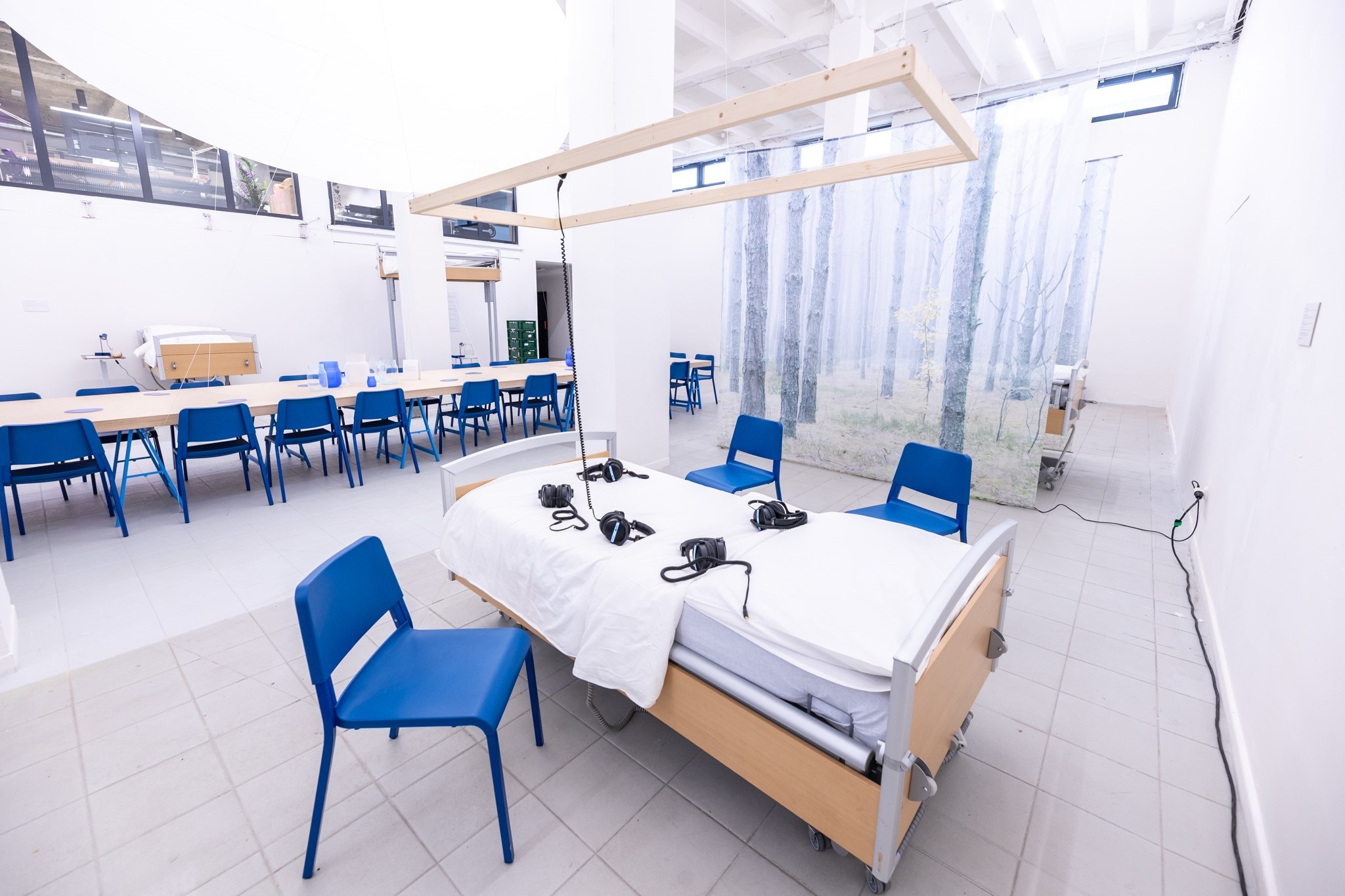
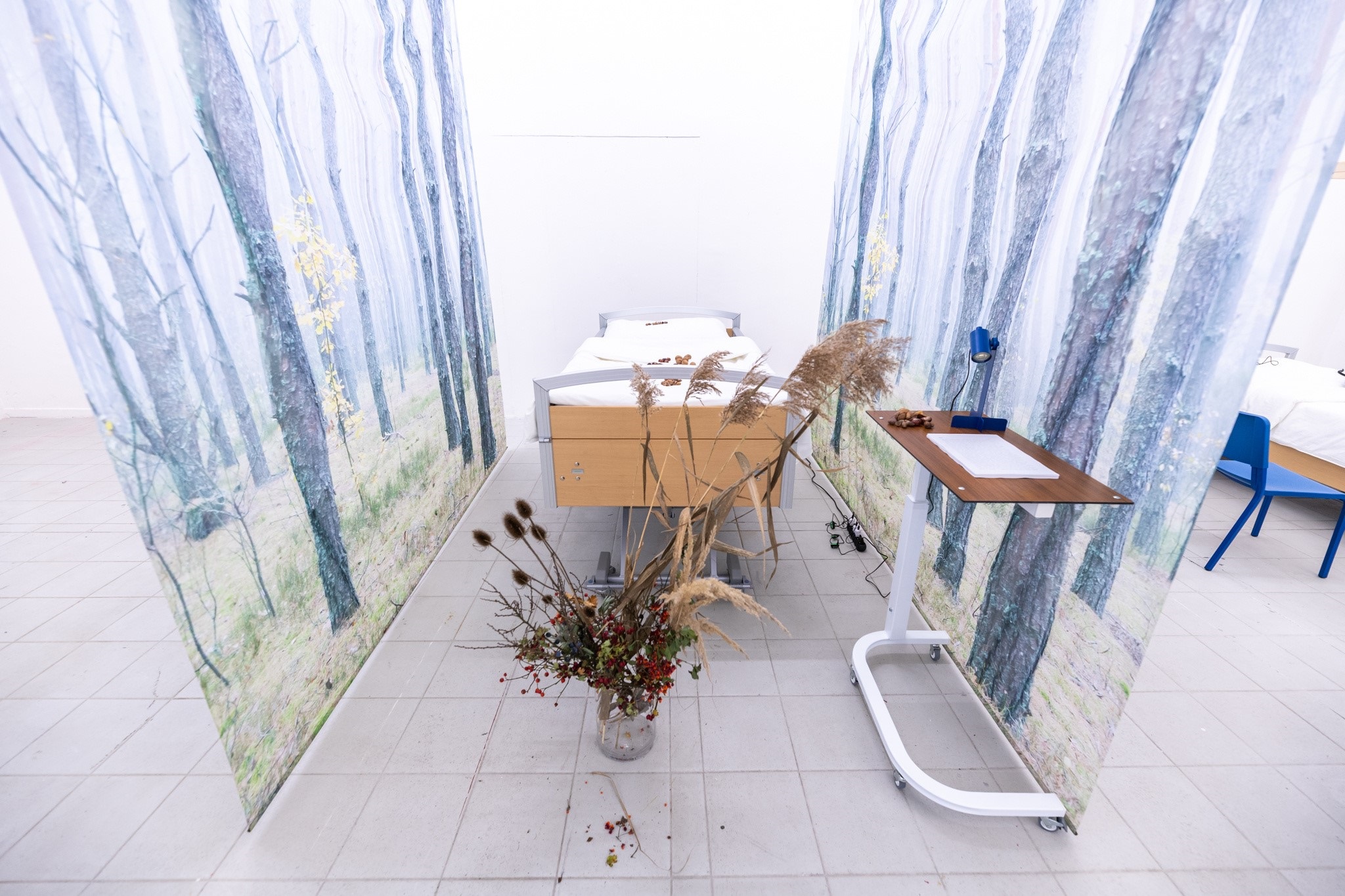
The exhibition Institut blízkosti took place in The Chemistry Gallery in Prague and focused on topics of care and the relationship between a caretaker and their patient. Cpin conceived it as a spatial sequence where the visitor was not only an observer but a participant in those situations that require us to slow down, become attentive and physically present. The installation’s central feature consisted of six separate beds placed in the gallery space. The beds functioned as a symbol of intimacy, vulnerability and the everyday routine of caretaking, transforming into spaces which one can enter and lie down, stop, listen. The installation thus created microworlds which referenced various forms of closeness and dependence.
The spatial design also worked with changes in lighting, the sonic environment and the rhythm of moving between the individual stations with the empty, unfilled spaces in the gallery providing moments of silence between the unfolding situations. The centerpiece was a table in the center of the space intended for sharing and dialog, thus connecting individual experience with the opportunity to meet others. Cpin’s installation transformed the gallery into an environment that not only represented a particular topic but rather created its physical manifestation. The space itself became a vehicle for empathy and a place where the abstract concept of caretaking became a personal, physical experience.
Tereza Finková