2
Designer of the Year
Eduard Herrmann a Josef Tomšej
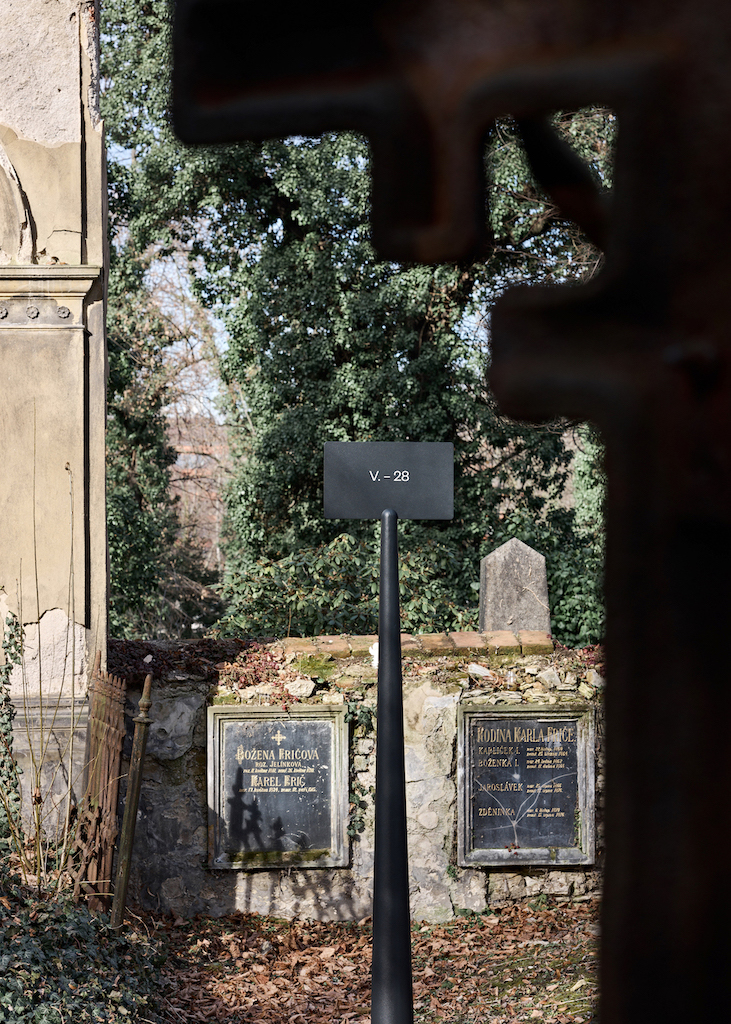
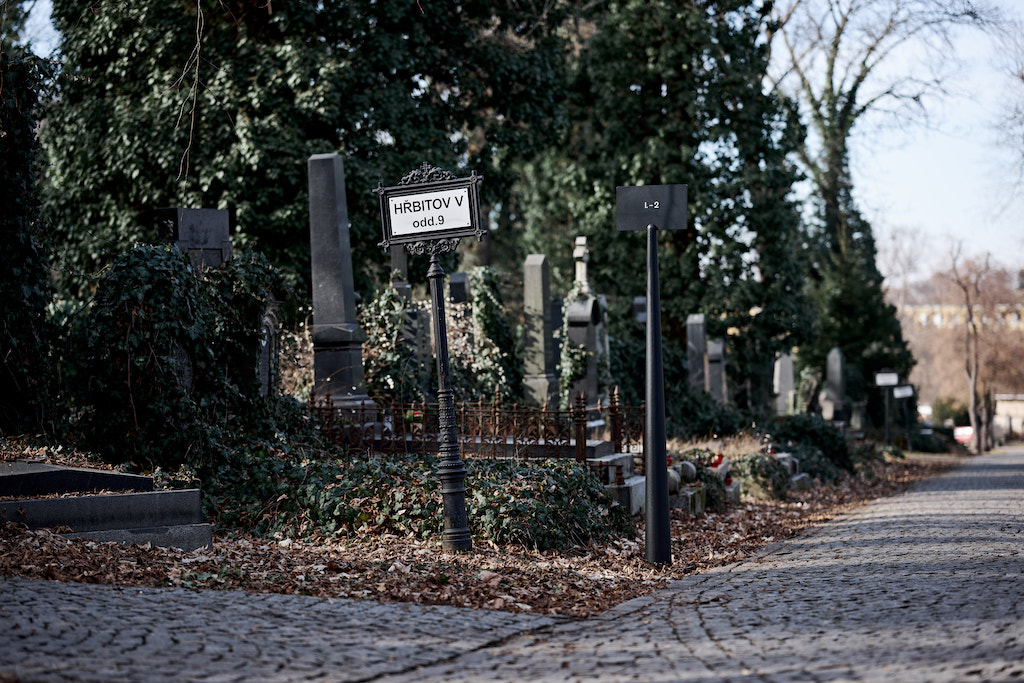
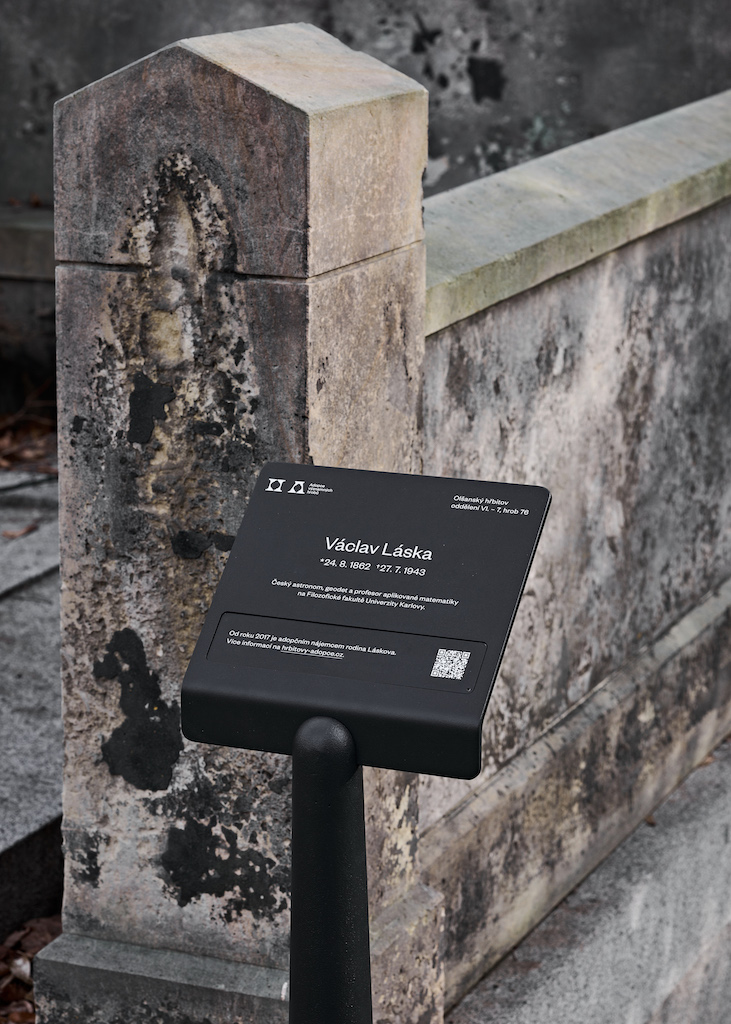
People who are sensitive and notice the subtle aspects of their surroundings would not have been pleased by the spaces of the Bubeneč Cemetery, with its non-standardized orientation system and unappealing decorative pillars marking the individual cemetery sections. But this has now changed thanks to the efforts of designers Eduard Herrmann and Josef Tomšej who have designed and implemented new furnishings and a unified orientation system. The designers have furthermore designed these for dozens of cemeteries around the capital city whose conception has until recently lacked any unified concept and was rather the outcome of decades of gradual additions.
The open call by Cemeteries and Funeral Services Prague has led to the redesign of certain fundamental metal items: not only the aforementioned pillars indicating the individual sections but also lighted signs, bulletin boards, direction arrows, water pumps, stands for watering cans, as well as dividers and containers for discarding wilted flowers. All these features comprise a collection of minimalist cemetery equipment whose visual identity was developed by the Lemon Design graphic studio working in collaboration with Maria Makeeva who created the original illustrations. The individual features are connected by the material and technology used: cast metal. The designers opted for this material due to its unique longevity.
Similar to parks or city squares, cemeteries are places where society relates to its public space and shows its ability to care for it. The creative duo of Eduard Herrmann and Josef Tomšej used their expertise to create a project which would be in use for decades to come. Their work also proves that a well-conceived open call from a similar organization has the power to cultivate the spaces we inhabit. This is very important in the case of cemeteries, especially in light of ongoing discussions about the dignity of death and dying.
Petra Cieslar
Andrea Běhounková
Tereza Bíbová
Andrea Březinová
Monika Čejková
Anastázie Kahotski
František Kast
Iva Knobloch
Helena Koenigsmarková
Linda Kudrnovská
Michal Lalinský
Gabriela Marešová
Michal Nanoru
Klára Peloušková
Lukáš Pilka
Liběna Rochová
Alena Řezníčková
Helena Šantavá
Klára Tománková
Pavel Turek
Karolina Voňková
Karolína Vránková