Hall of Fame
Libuše Niklová
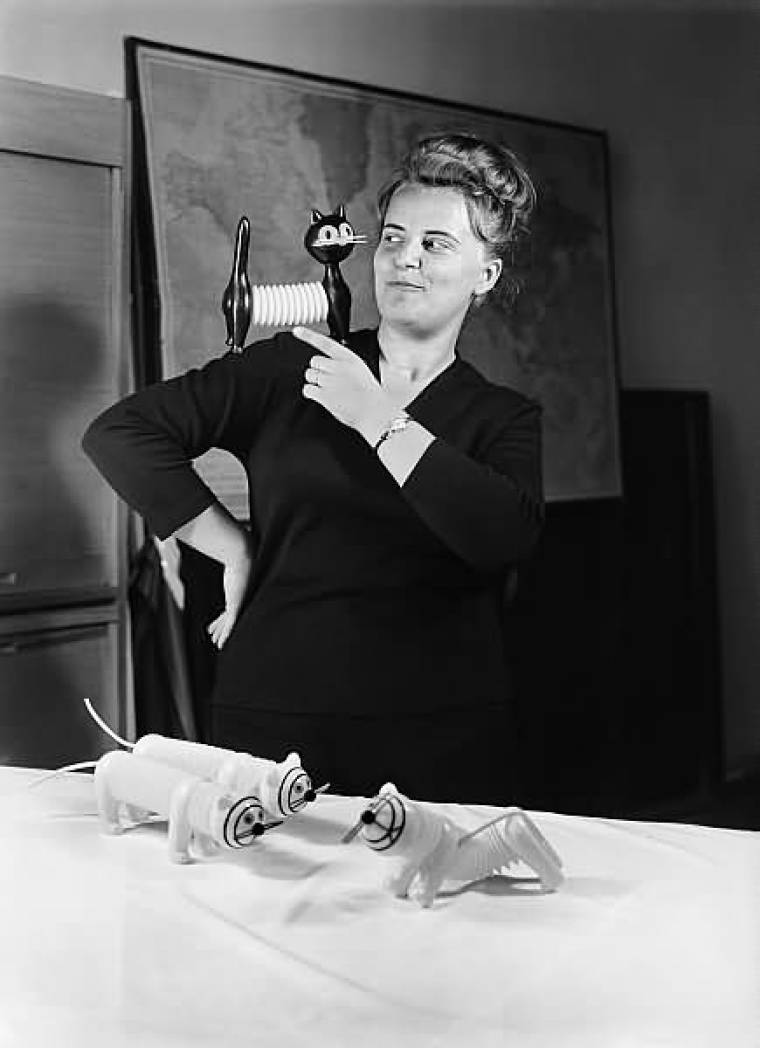
She devoted her entire life to the creation of plastic toys. Every year, she came up with new designs, printing patterns, and ways of packaging. The genius of Libuše Niklová (1934–81) resided in a perfect harmony of all her talents – she was an extraordinary artist, graphic designer, and inventor.
Her ex-colleagues say that she used to be very hard-working, modest, and always cheerful. It seems as if her positive energy took shape in her fascinating toys, which have been making children happy for so many generations. She always worked as a company's designer. At first, she worked for Gumotex in Břeclav in the late 1950's, where she was employed after finishing her education at the High School of Applied Arts, and where she conjured up a long series of small squeeze toys, tender not only at a glance, but also to the touch. Her first toys quickly gave evidence of her exceptional artistic talent and understanding of the perceptive souls of children.
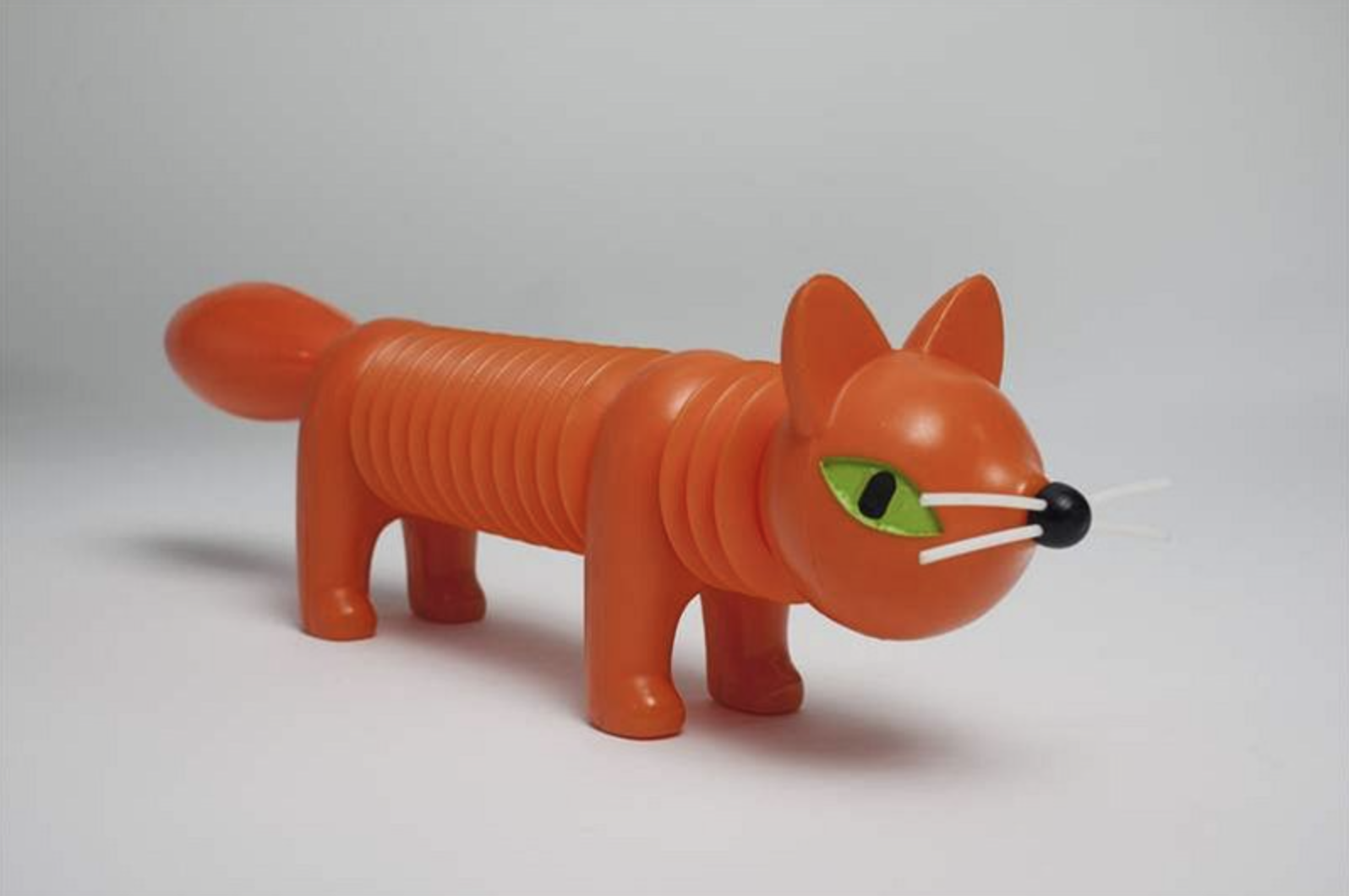
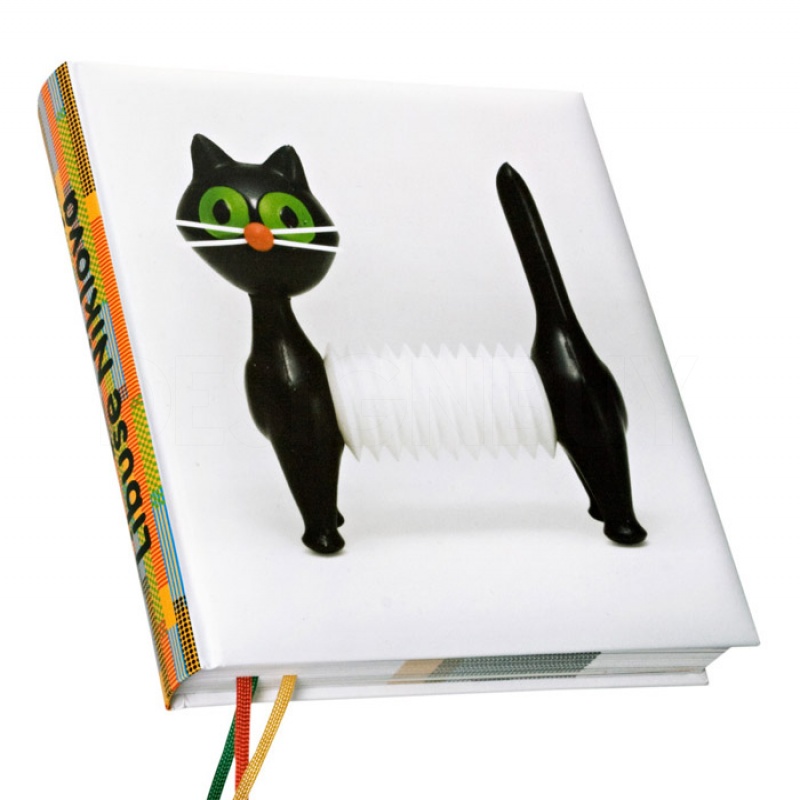
Libuše Niklová was very conscious of the fact that toys are one of the first objects that human beings come into touch with while growing up, and can learn from while also having fun. That's why she tried to stimulate all the senses as much as possible. In the early 1960's, when she started working for Fatra Napajedla, she came up with toys that were innovative not only from a visual and formal point of view, but also from the technological side. During this period, she still sometimes designed tiny figures manufactured by Gumotex, giving them a timelessly stylized expression, as we can see mainly in the collection of professions from 1964 (e.g. a Doctor, a Nurse, a Chimney Sweeper). At the same time, she was designing her first imaginative toys for Fatra - inflatable, decorated with printed patterns, or hand-decorated, made of polyethylene - for which she thought thoroughly of the form, appearance, sound, and packaging. In this way, the two- chambered squeeze cat Micka and dog Alik were born (in which the author ingeniously achieved jagged shapes that were easily gripped by children by using very few joints). and the currently iconic Tomcat with accordion like body, for which she was inspired by the flexible folding pipe used for flush toilet systems, which was being developed in Fatra at that time. Libuše Niklová turned the pipe both into a solid and flexible body, in which she placed the squeaking gadget.
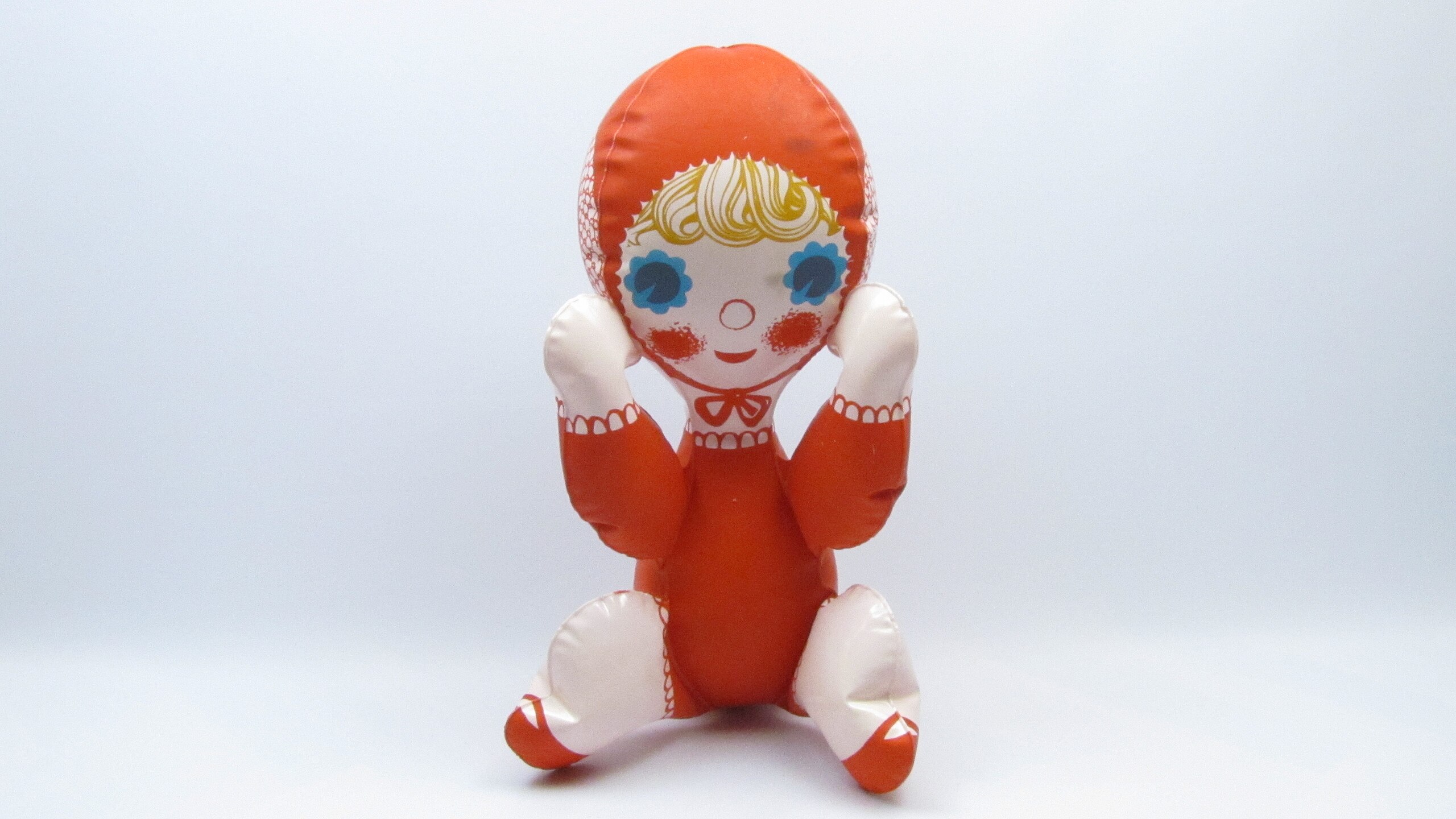
Gradually, an exceptional collection of building set animals was created, among which Tomcat became the most successful piece, which was even given as a present to all babies at the welcoming ceremony of new citizens. Already at the beginning of her career, Libuše Niklová was a designer par excellence. She used modern technologies, tried to simplify production, and economized materials. She holds a total of nine patents for her inventions. These include (apart from the above mentioned accordion-like collection) the very popular series of squeeze inflatable animals with movable eyes, e.g. the Buffalo (1971), and the Elephant (1972), which were designed like ingenious interactive children armchairs, as well as the dolls, e.g. the Little Red Riding Hood (1969), and the Dutchwoman (1970), in which the author managed to solve the cut of each part and their joining with regard to the simplest possible and the most precise application of the serigraphy printing. And let's not forget her balls or objects designed for water play, above all the popular boats.
Libuše Niklová, the designer from Zlín, has achieved her place of honor not only among the memories of an endless row of children, but today also in the history of Czech design, and considering the field of toys, also among the world-famous designers. The international response to her successful retrospective last year in the Museum of Decorative Arts in Paris, as well as the interest in her monograph (which has just won the bronze medal at the prestigious Most Beautiful Books in the World contest), prove that the legacy of Libuše Niklova's works is still very vivid.
Tereza Bruthansová