3
Designer of the Year
Elis Monsport
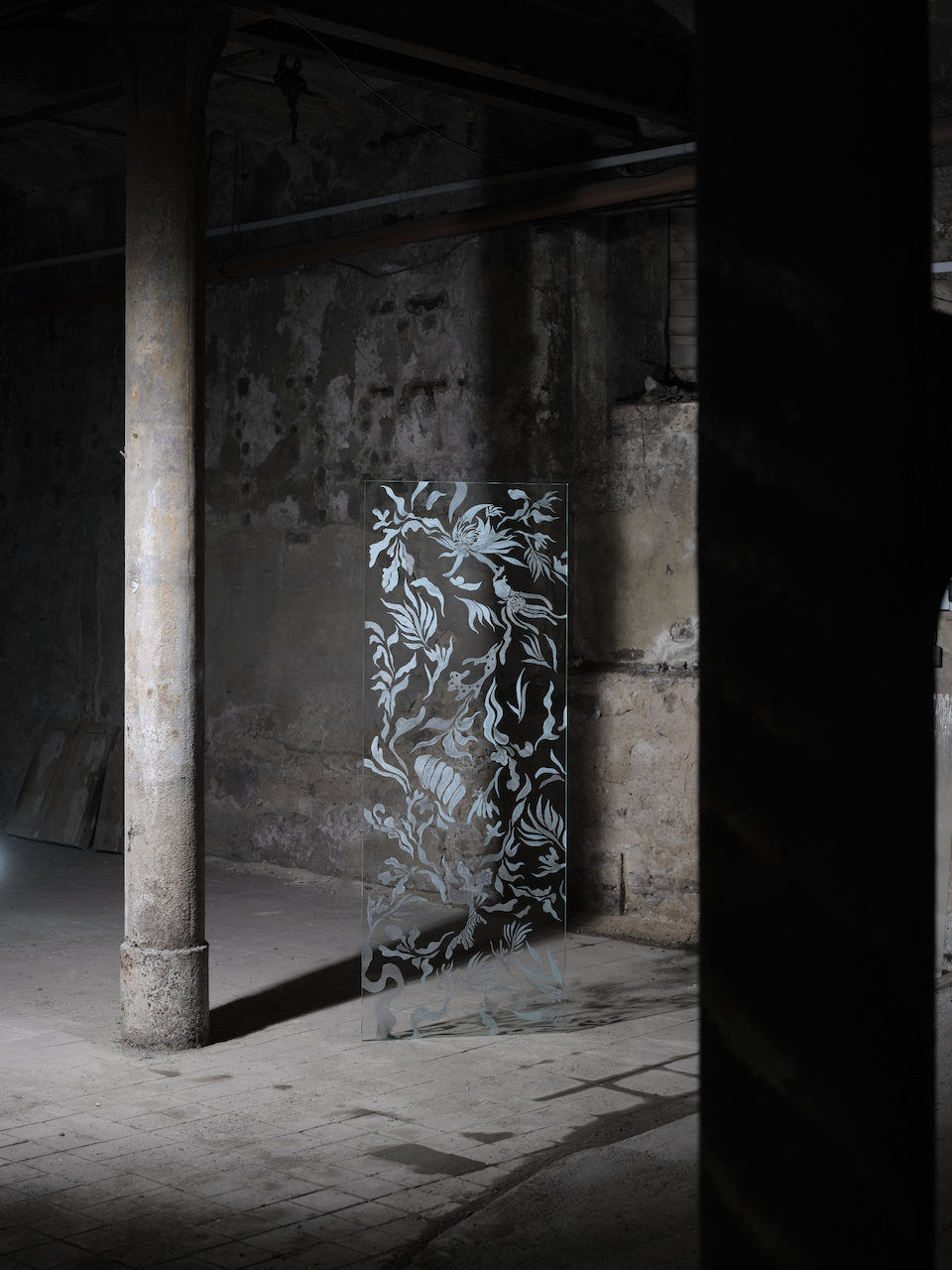
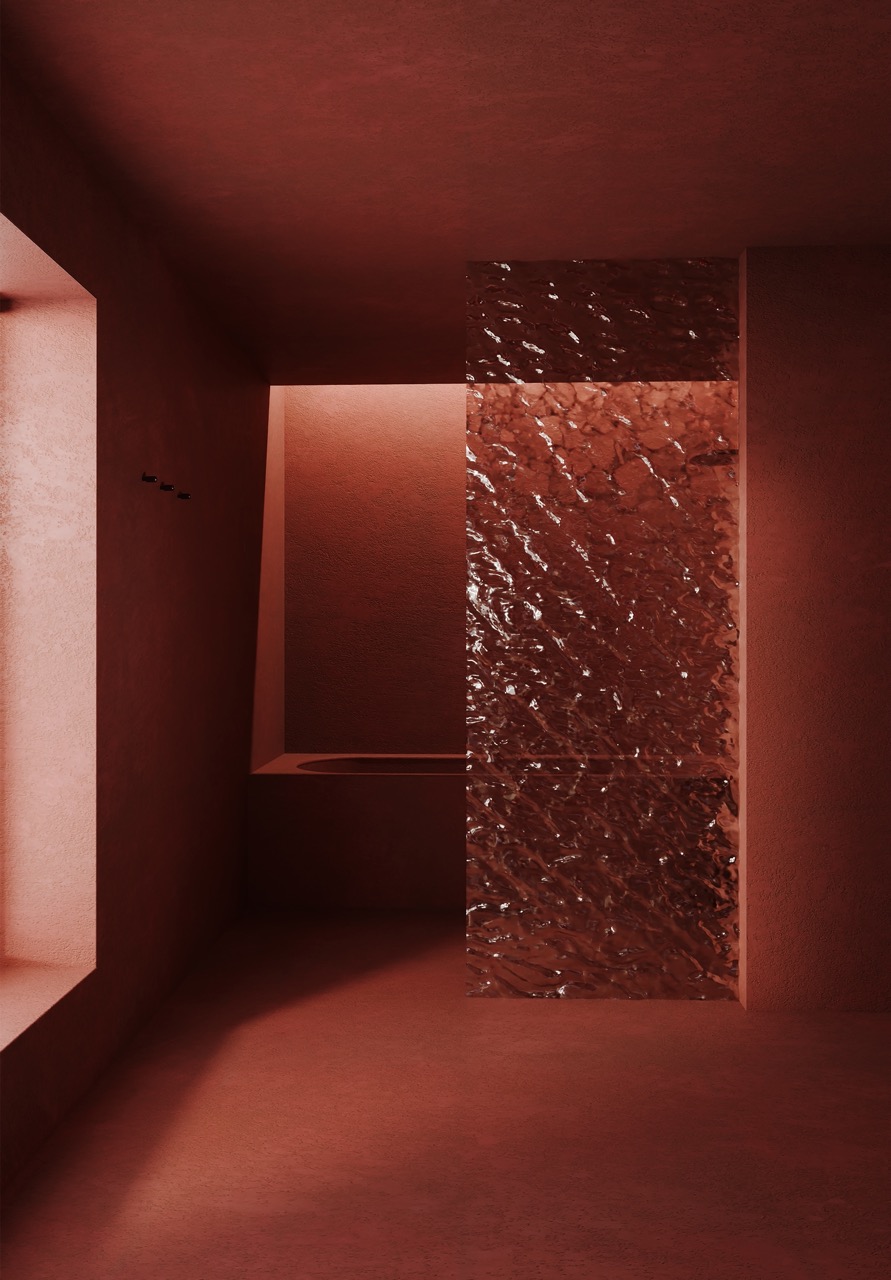
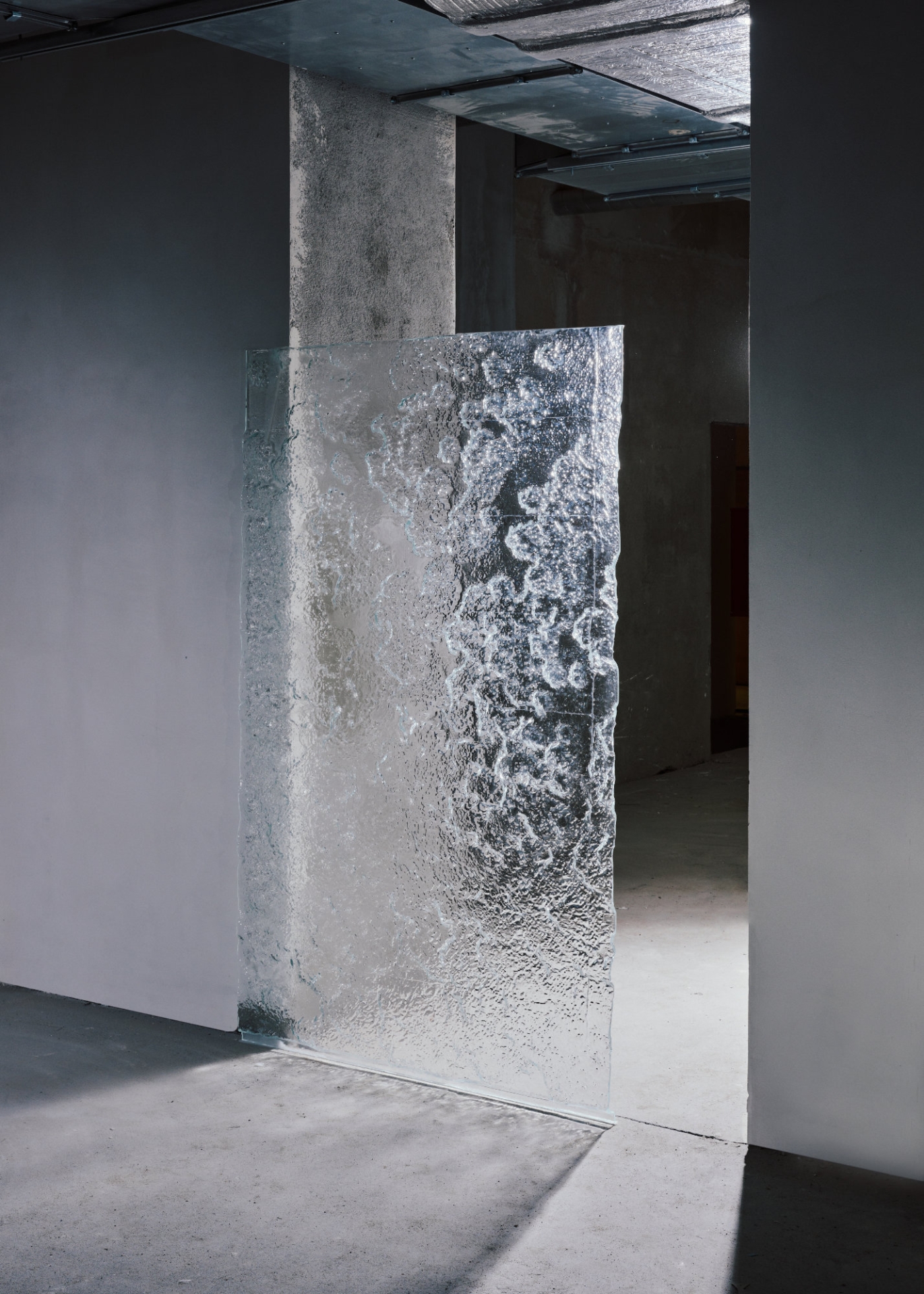
In 2025, designer Elis Monsport focused on producing commissioned glass interior features such as screens and dividers. These technologically demanding objects combine practical function with artisanal processing of glass to create a unique aesthetic effect of playful light for any interior. Monsport’s utility objects show her great sensitivity to light and sculptural aesthetics that builds on a long tradition of Czechoslovak glass art and its unique position in architecture.
The Botanico Paravan combines fused and engraved glass with a mirrored surface. Elis Monsport has been working on difficult, large-format glass engraving for a long time, making her stand out in the Czech context. The Paravan is covered in etched drawings reminiscent of lush jungle vegetation and feline predators, and a female figure seems to be stepping out from it like from a Renaissance painting. The engravings and textures of fused glass give a sense of depth and fragility: the screen does not so much provide a firm barrier but rather a filter that slows our vision, fractures light and transforms any interior into a soft landscape. Even in the simple, right-angled spaces favored by modern architecture, the screen creates space for irregularity and visual tension.
A similar effect is achieved by the dividers and shower screens made of flat glass whose soft deformations seem to disrupt rational function. The process of flattening the glass into its final form creates a cascade of soft waves and irregularities that distort and react to the movements of the body as well as shifts in lighting. The resulting dividers and screens thus redefine the limits of visibility: they separate without isolating and bring visual sensation and a haptic element into everyday rituals. Monsport uses the glassmaking craft to modulate and soften the interior while also making it more dynamic. Glass is not a neutral filler for her, but rather a living material carrying the traces of its material production process and actively forming the way we see and perceive interiors and their inhabitants.
Klára Peloušková
Karel Císař
Karolína Davidová
Joachim Dvořák
Kateřina Fišerová
Lucie Koldová
Danica Kovářová
Ján Kralovič
Terezie Lexová
Veronika Pařízková
Jan Plecháč
Veronika Ruppert
Štěpán Smetana
Rostislav Vaněk
Jana Vinšová
Eliška Vrbová
Tereza Zelenková