Discovery of the Year
Františka Iblová
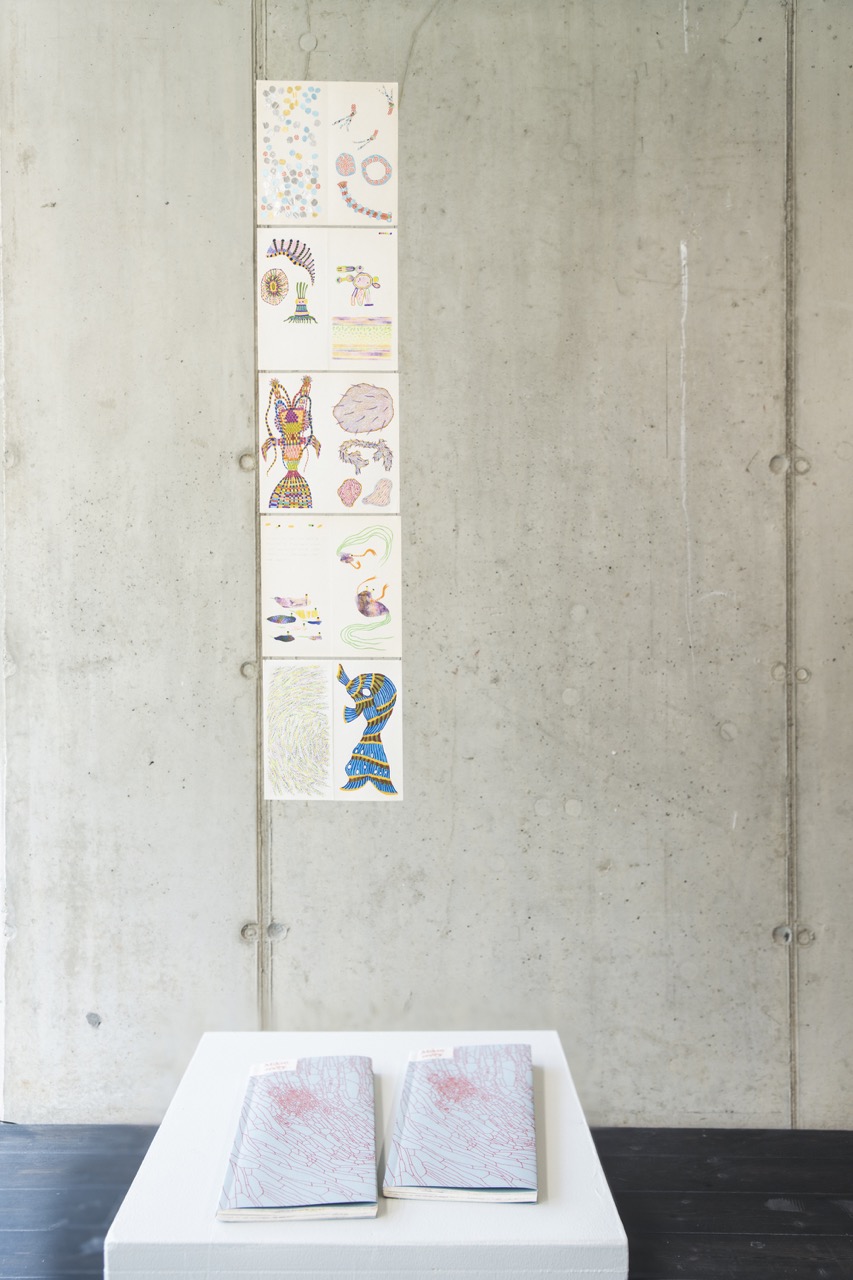
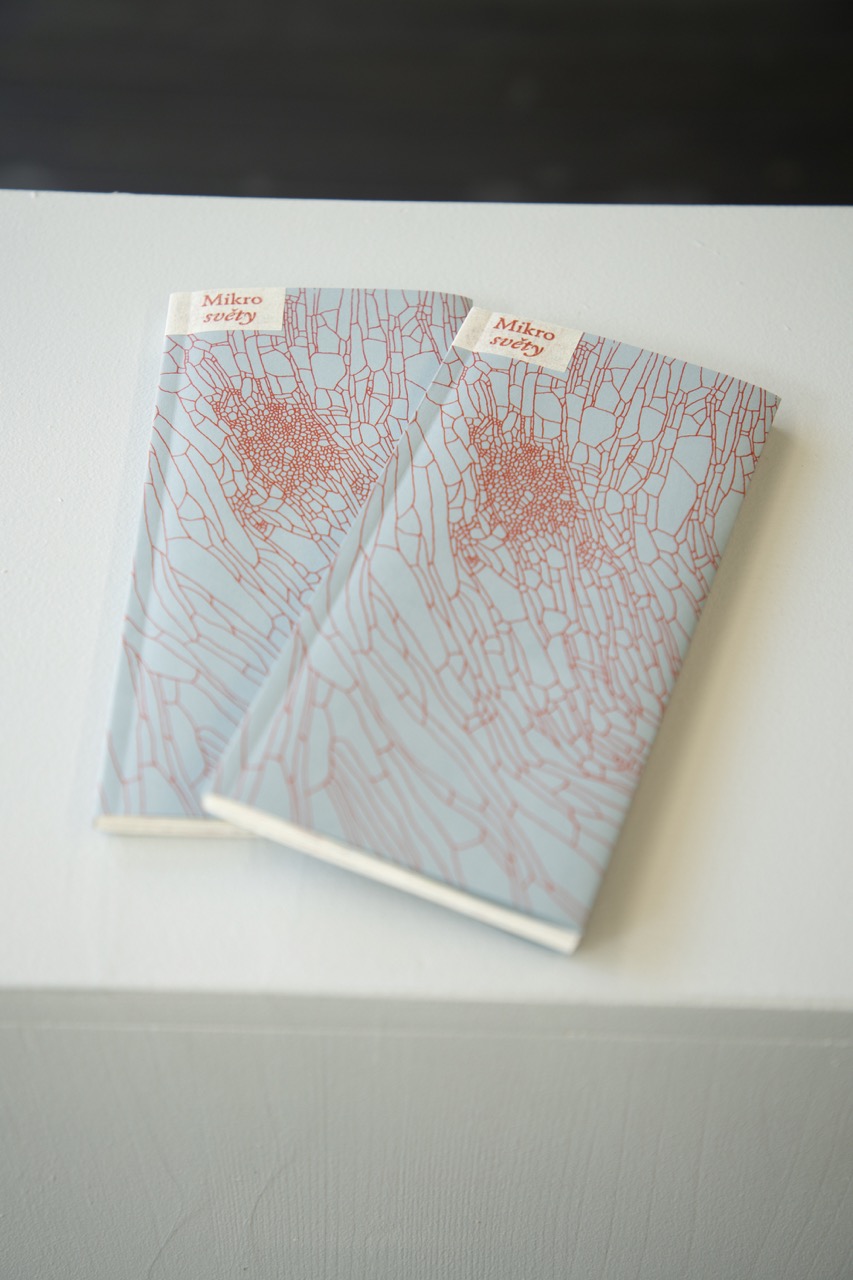
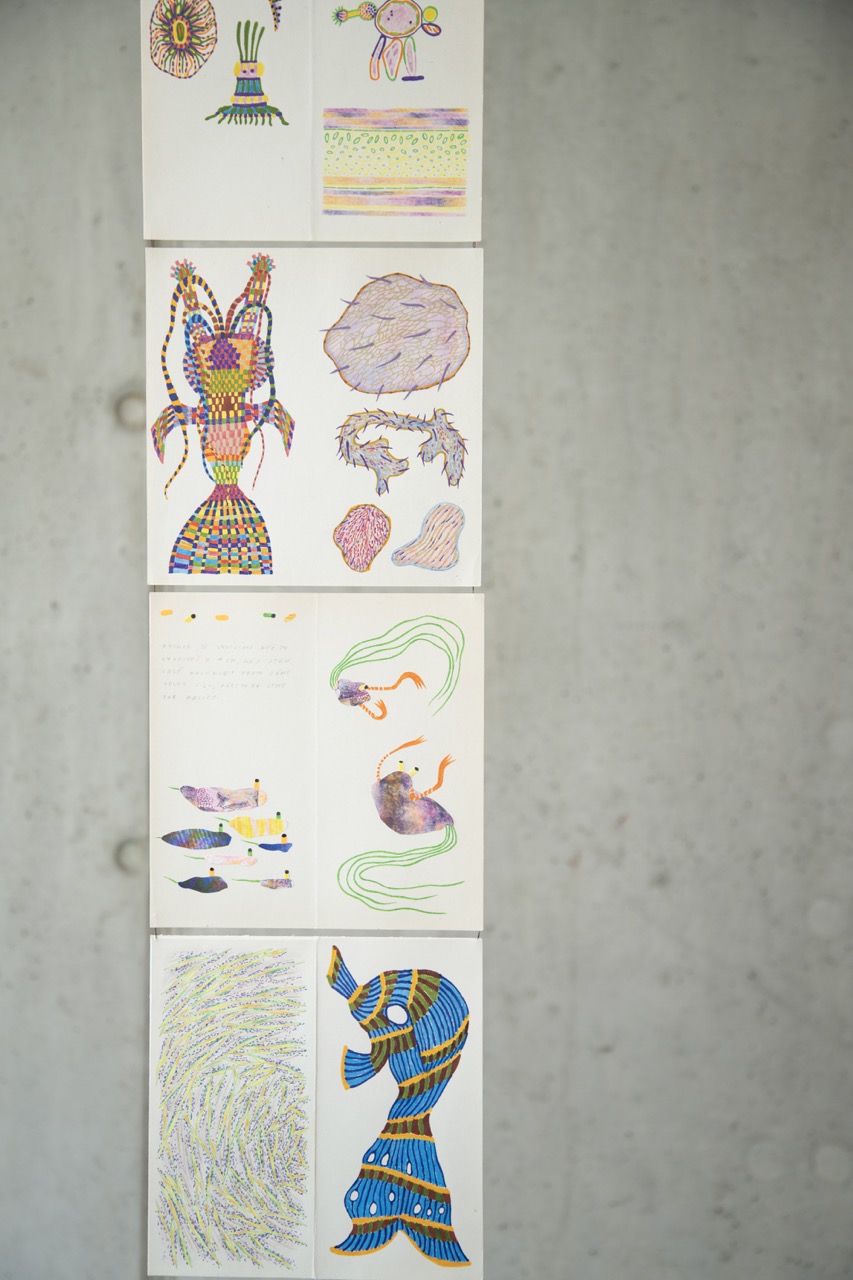
When I first heard about Františka Iblová, it was in connection to a trip she undertook somewhere in the plains of Iran; and then I saw her blind prints in which she explored the structures of rivers and mountains as if the paper was the Earth and she was discovering ways of making the landscape stand out. Finally, I saw her graduate project that developed into the book Mikrosvěty. Travel, discovery, research: in an era when everything seems to have been discovered already, an era when we are saturated with information and highly sensitive technologies, these concepts seem to have disappeared. Can we still discover something new in this world? Can we still discover what no one has discovered before us, draw something no one else has drawn before?
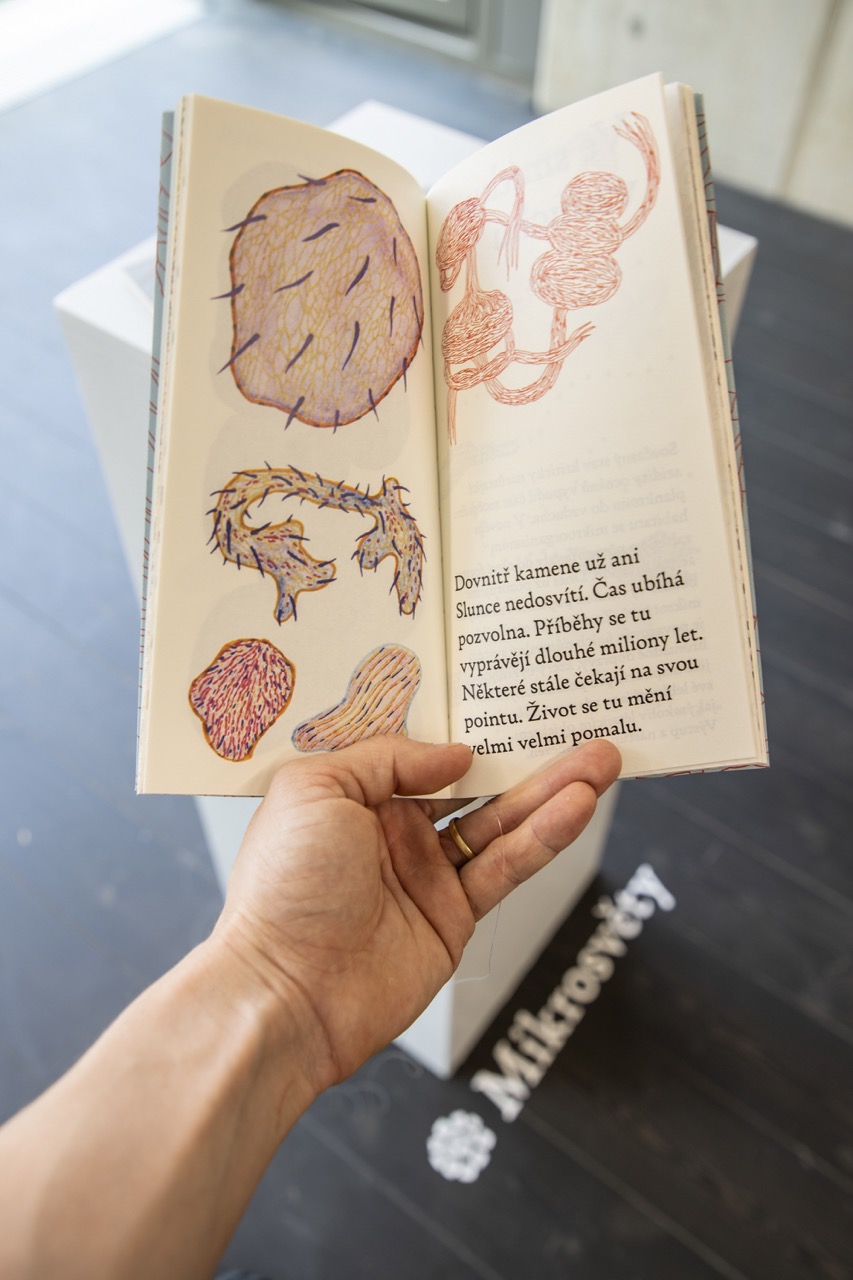
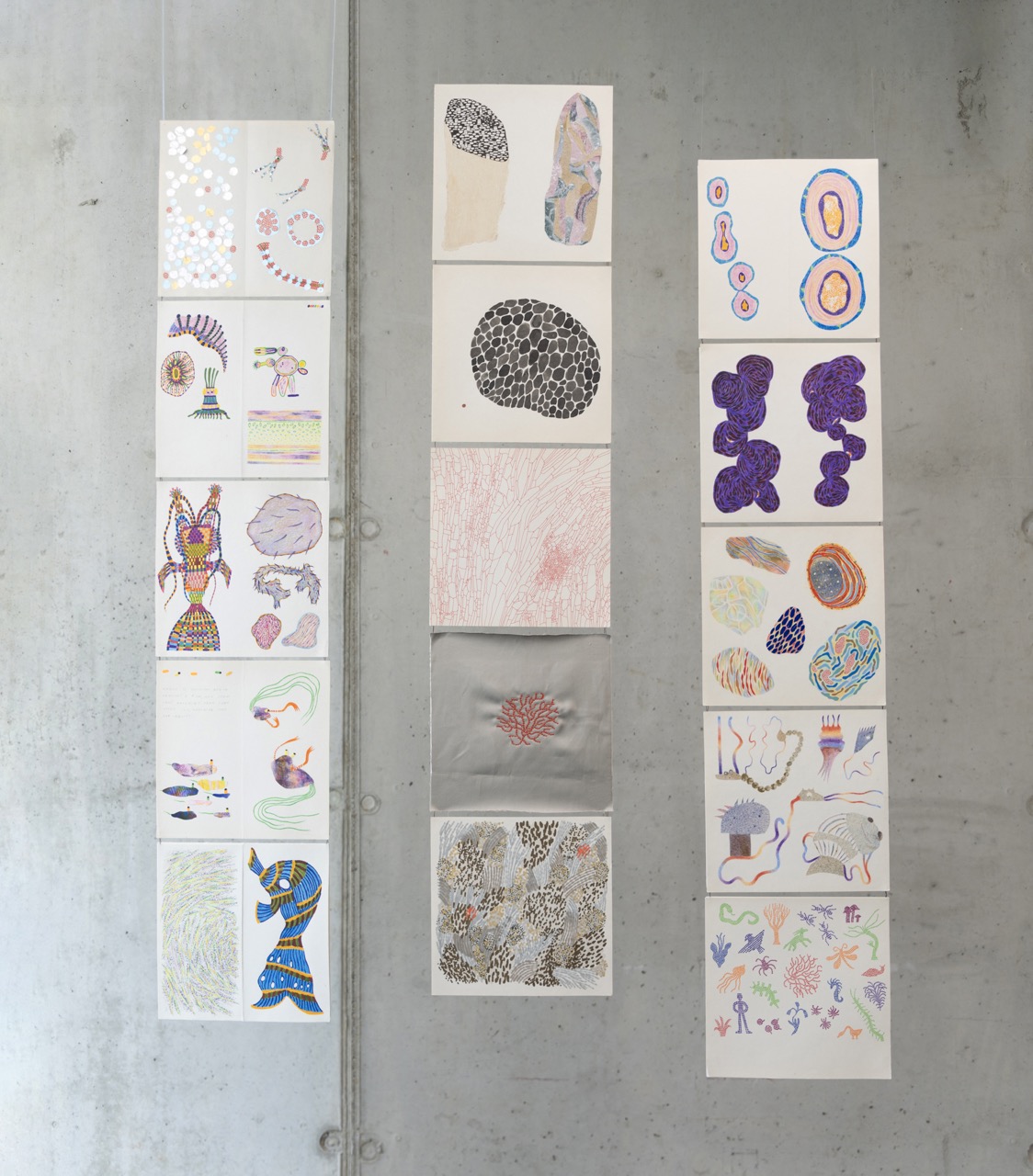
Maybe that is why Františka has chosen to submerge herself in mysterious microworlds invisible to the naked eye. The small book is accompanied by a ‘Microindex’: a risographed catalog in which she shows microscopic blow-ups of natural materials as well as man-made objects and textures. She observes and compares a print raster, a digital display, the hairs of a toothbrush, a composted coin, seashells, stones, lichen, yeast and curdled milk as if travelling through mysterious paths and seemingly invisible structures, strange habitats and winding hidden paths. As if she were walking through an unknown landscape. The book Mikrosvěty takes this journey further, beyond the limits of mere observation and research: she uses her experience of traversing undiscovered blowups as a departure point for an experimental game, showing that what we had considered to be lifeless in fact has a life of its own. What happens in a load confined in stone, a speck of air, underneath the skin, in the scales of a root, on a leaf follicle? She guides us through this newly discovered, proximate world (it is, after all, right under our noses – we just fail to notice) with a mix of humor and gravity and by means of aquarelle, simple marker techniques, frottage, collage and stamp printing.
Her opponent during the defense was art theorist Anežka Šimková, who perhaps said it best: “The artistic solution of the landscape and the accompanying illustrations draw from micro images and their fragments, presenting a charming, creative game playing out in other dimensions and below the surface of various phenomena. The soft, colored drawings seem to organically teem over the paper while remaining in line with the overall thematics of travel as well as the accompanying texts. The close connection between illustrations and the quasi-academic texts that easily spill over into the realm of the phantasmic create a unique, inspiring, and often amusing atmosphere… Based on microworlds and their parts, she has created a new, living world, a modern art book which has the potential to develop the readers’ imagination and sense of adventure, and is perfect for both children and adults.”
Františka Iblová is a member of the young generation that has witnessed the failure of the human world. She rather turns to where she finds tension, potential and life: to nature, the landscape and the cosmos. Humanity does not reign over this world, but is rather just one of its integral parts, one of a myriad possibilities. And that is indeed something to ponder.
Tereza Horváthová
Iva Knobloch
Lenka Lindaurová
Jan Mergl
Filip Suchomel
Karolina Voňková