1
Illustrator of the Year
Michal Bačák
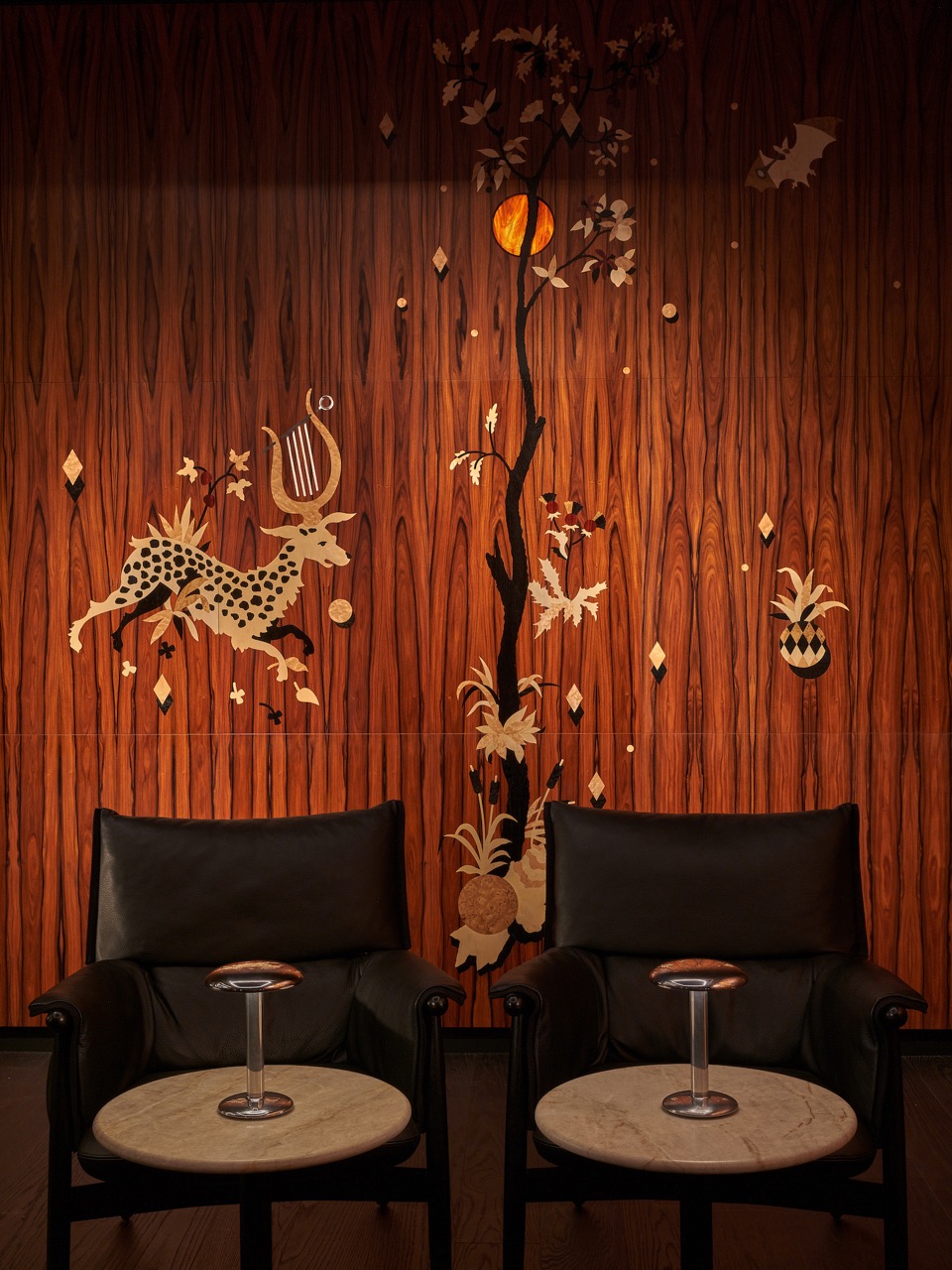
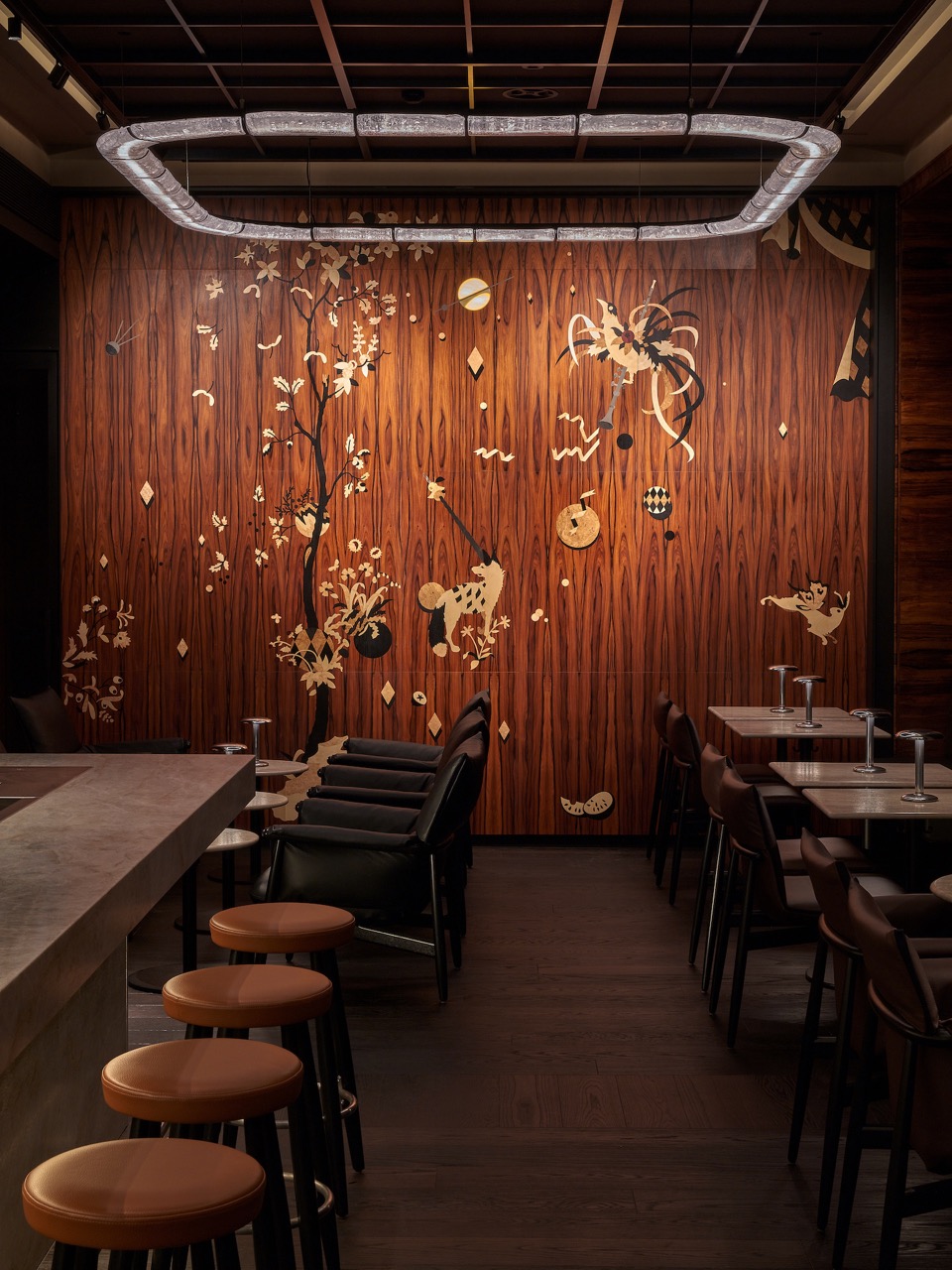
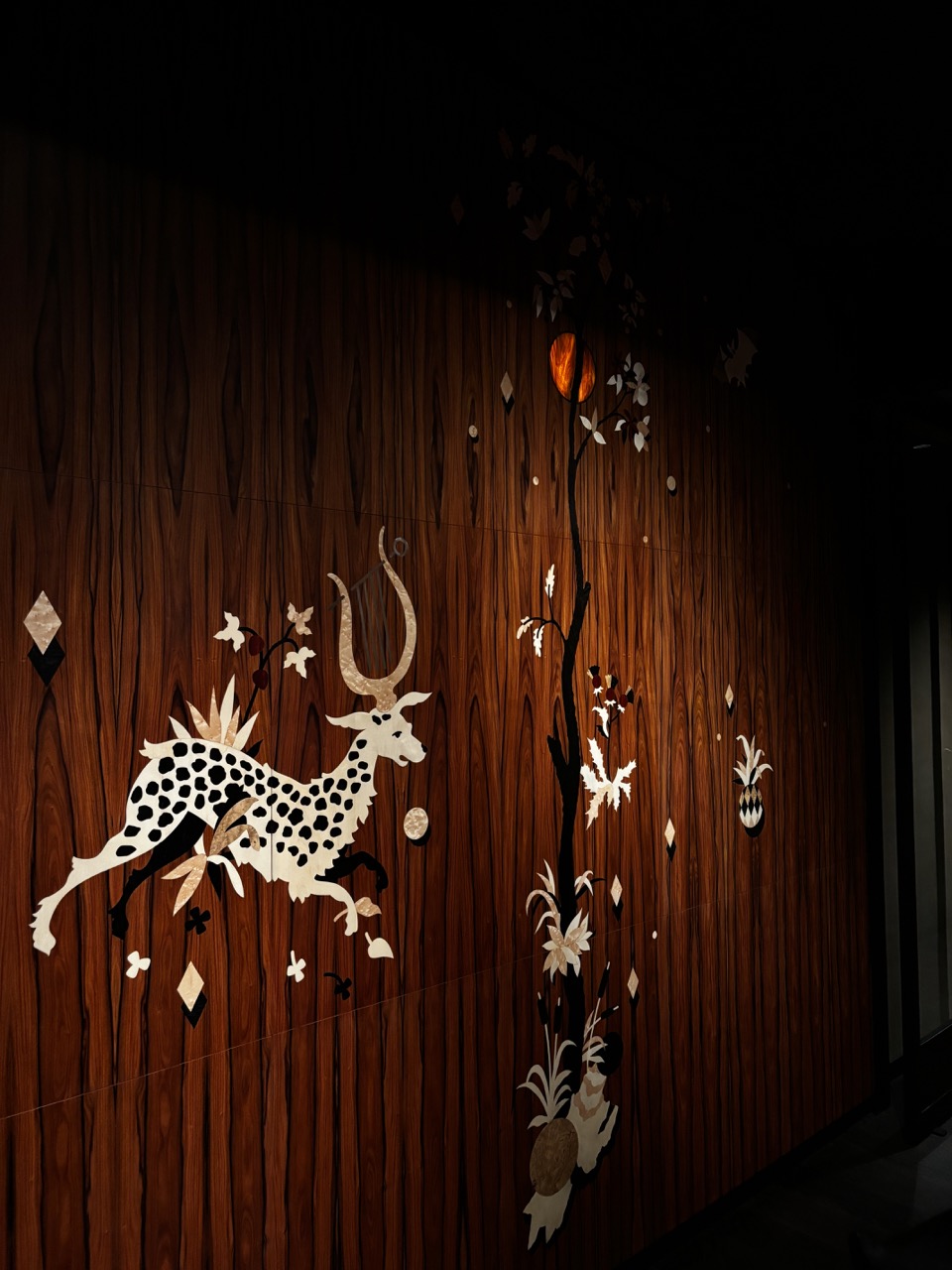
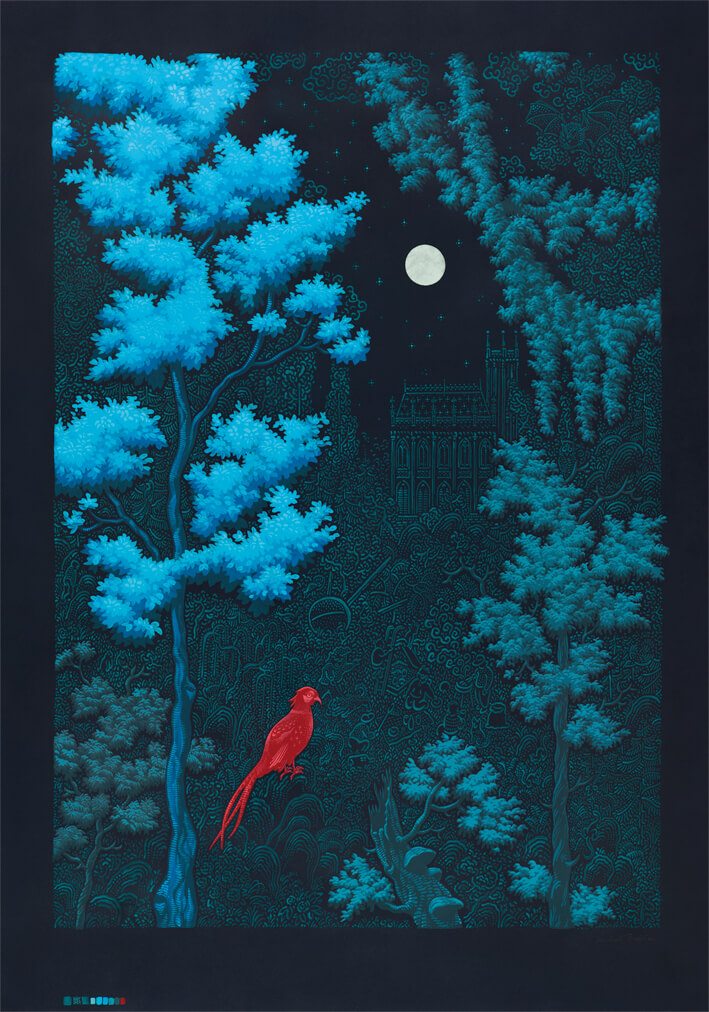
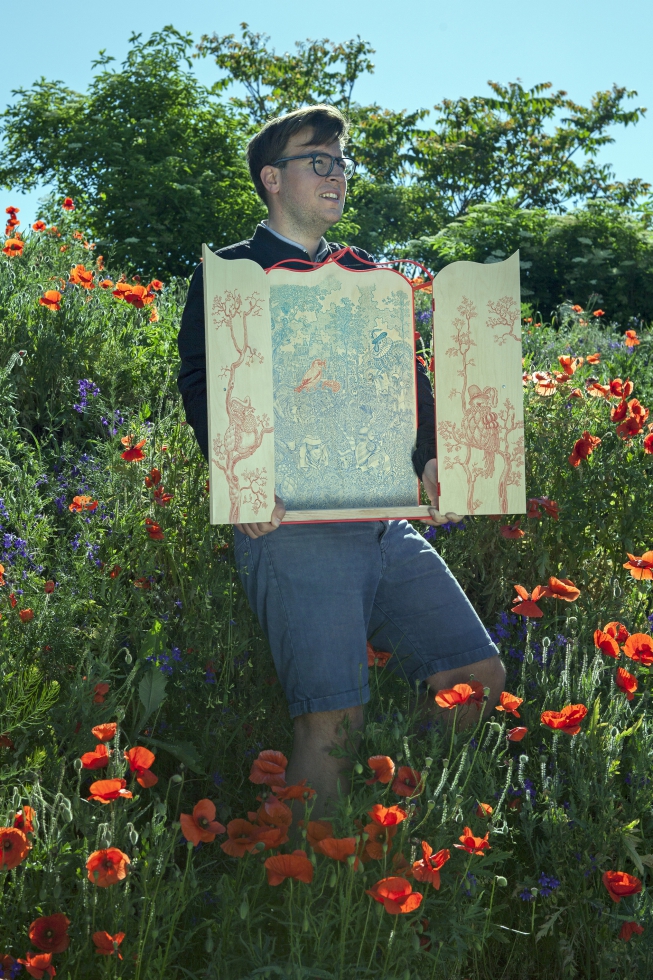
By researching and successfully mastering the intarsia method with precious wood, Michal Bačák has proven that the category of illustration does not begin and end with paper, but rather exceeds it. Although the artistic discipline of intarsia has increasingly been applied to original works, designer products and architecture, the method simultaneously connects a few craft disciplines which require precision and planning. It is not about making a quick sketch which would aim to dynamically capture one’s artistic style. Bringing spaces reminiscent of the First Republic back to life seems to be Bačák’s domain of choice, and this is not the first time that he connected his free illustration work with applied design for interior décor – in 2017, he designed a turquoise tapestry for the Myšák pastry shop which harked back to chinoiserie themes. During his collaboration with Olgoj Chorchoj studio on decorating the Forbína theater bar, he switched from textiles to wood. The mural illustrations made of palisander show his skill in using the specific medium for creating stylized narratives.
In this project, Bačák furthermore moved away from his typical, linear and often polka-dotted style, favoring the principles and flat geometries associated with intarsia. It is perhaps a sign of the times that contemporary art is revisiting craft methods and has increasingly started appreciating artisanship. The technique of intarsia is currently undergoing a renaissance, and has become a challenge for painters, photographers and illustrators alike. Marquetry often evokes exotic Asian places or aristocratic houses of the Renaissance era and Bačák’s phantasmic illustrations thus automatically acquire a sense of fragrant, far-away lands. He uses precious woods like palisander or mahogany, which also come from these distant places and create a unique color scheme. The designer’s choice to subdue his own iconic style is refreshing and shows his respect for the technologies he uses. It also harkens back to the older designs using intarsia at the Parnas restaurant, where they provide a loose template for the enchanting stylization of plant and animal motifs. The horned fox, an ibis holding a drink, a hare with butterfly wings or a bird-of-paradise playing the clarinet are some of the motifs Bačák designed for Forbína, thus providing a humorous take on the bar theme and exhibiting a new form of liberated illustration which far exceeds the limits of the book format.
Emma Hanzlíková
Andrea Běhounková
Pavlína Blahotová
Tereza Bruthansová
Martina Freitagová
Petr Jansa
Nora Grundová
Helena Kardová
Michaela Kádnerová
Helena Koenigsmarková
Robert Kováč
Jan Králíček
Michal Lalinský
Francois Leblanc di Cicilia
Gabriela Marešová
Gilles Massé
Kristýna Mazánková
Jan Mergl
Anna Nosková
Lukáš Pilka
Jan Press
Petra Roubalová
Martina Schneider Králová
Eva Slunečková
Filip Suchomel
Vladan Šír
Klára Tománková
Jana Vinšová
Eliška Vrbová