1
Discovery of the Year
Eduard Herrmann
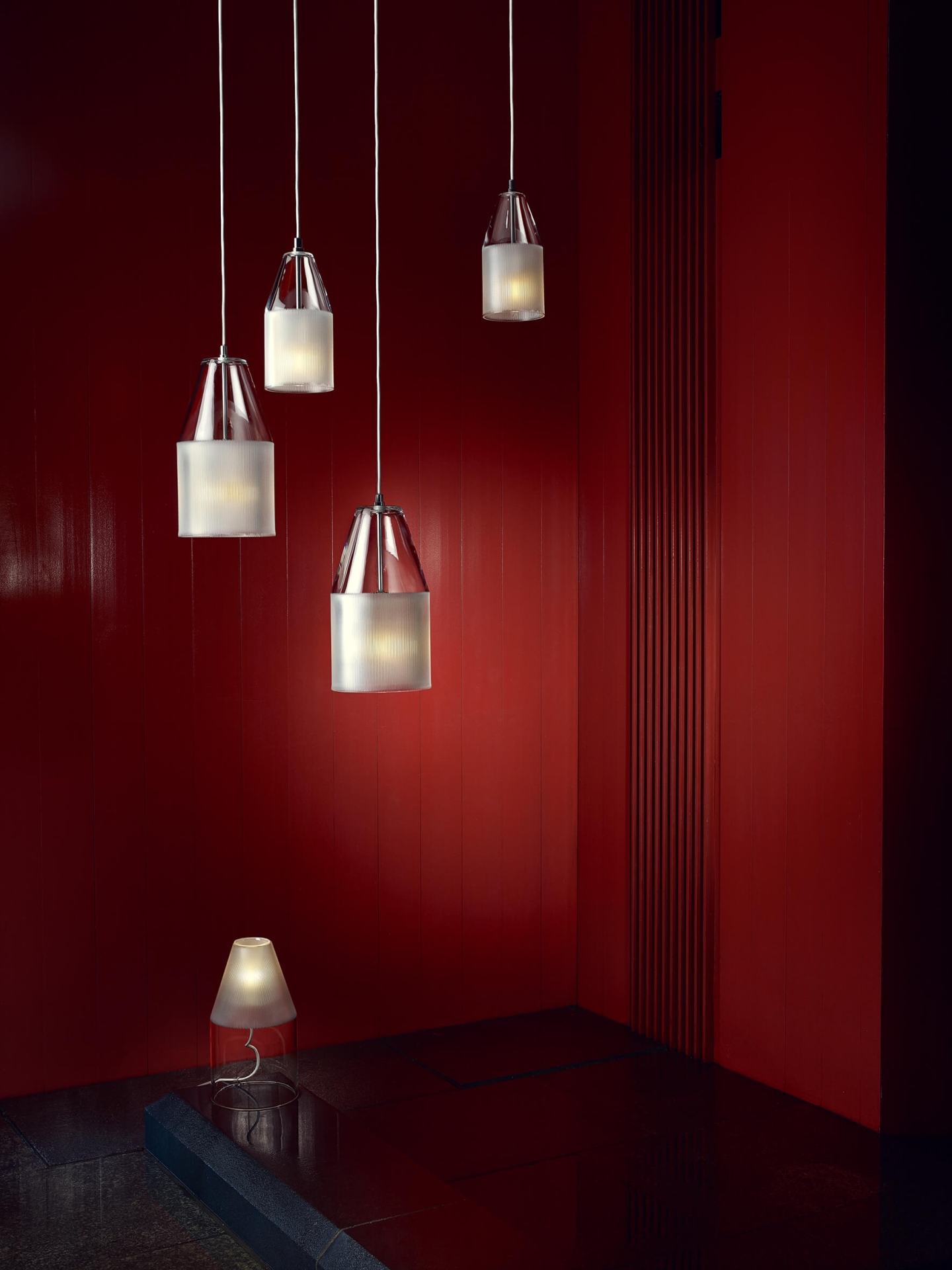
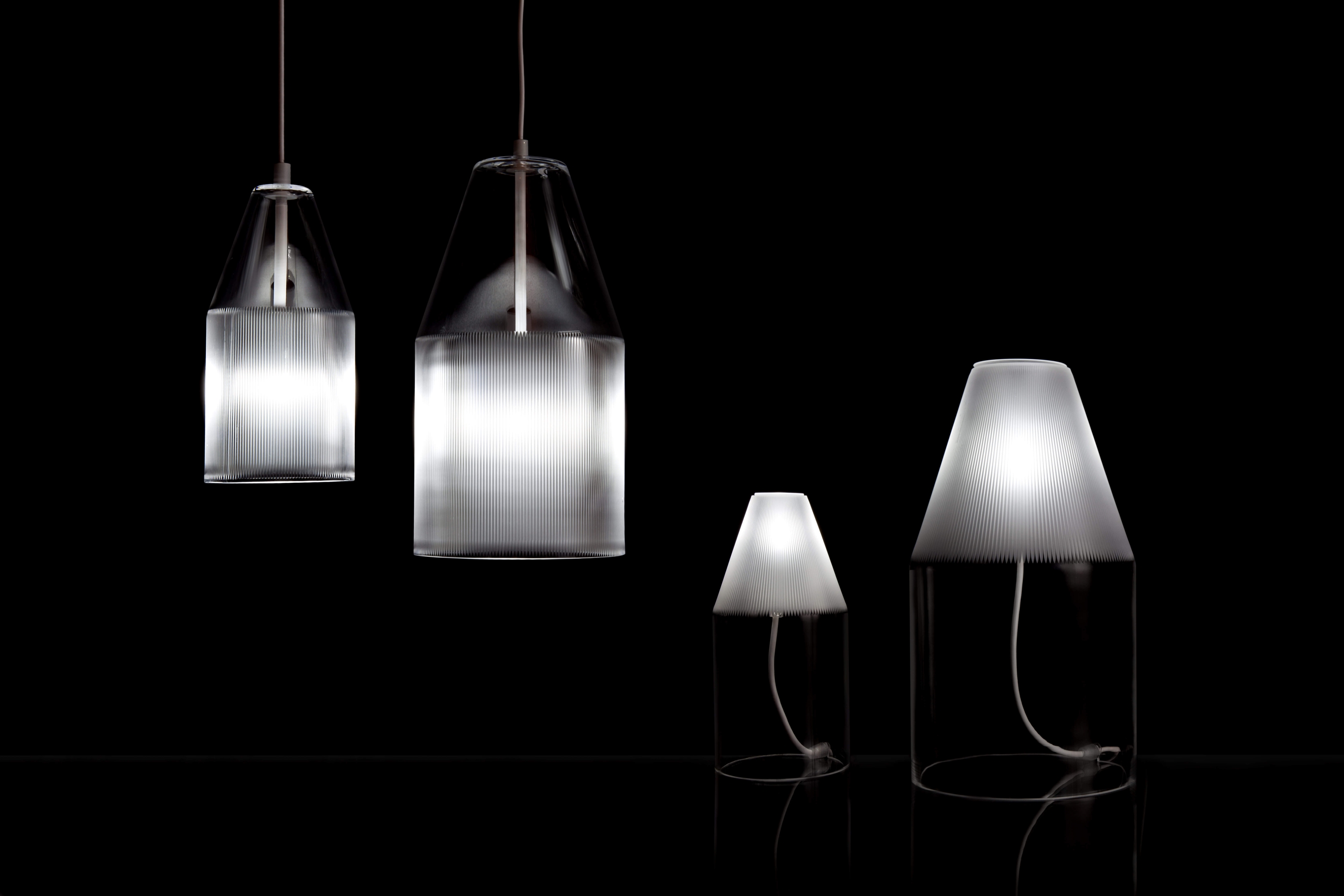
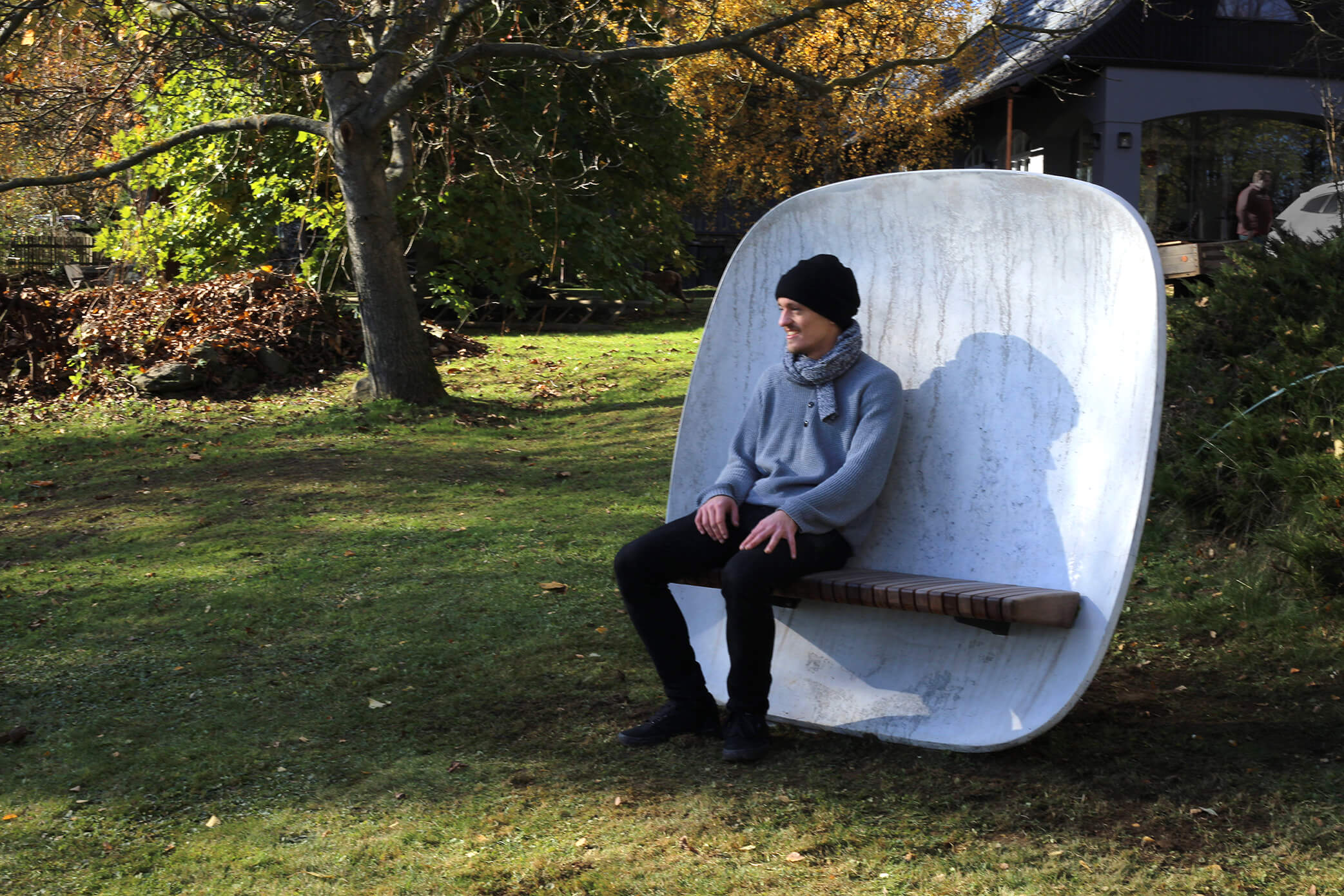
The park bench is designed so as to perfectly blend in with its surroundings. The oval backrest of fortified concrete offers privacy and its structure and form resemble a piece of rock. Here, urban movables are becoming parts of the landscape which they have been set into. The author's source of inspiration was the acoustic mirrors found throughout southern England – large concrete constructions that once served to promptly warn against German aircraft. The specific qualities of the backrest allow its users to better hear the sounds coming from the front, while the noise from the back is, on the contrary, isolated. Orienting several benches towards one another thus creates a communication channel. Since the material applied is firmer and denser than standard concrete, the shell can be slimmer and more fluent. The anchoring is hidden under ground. The unique idea was also acknowledged by the Diploma Selection jury, and Eduard received an award for it at Designblok 2016. The shapes present in the Iris collection of glass lights were inspired by the initial idea of a lamp divided to the head and the legs. The upper part of a simple cone form has a linear ground finish, which does not only play a decorative, but also a utilitarian role: such cut limits the degree of released light and, moreover, is a visual reminder of a fabric lampshade. The bottom part disappears into the dark, and there is only the cable, simulating the supporting leg, meandering down from the bulb. The suspension variant is derived from an identical form and shape, but a different part is decorated. The designer managed to arrive at a collection of lights which evokes a subtle and soft impression with the help of utmost symmetrical and clean forms.
Radka Machalická