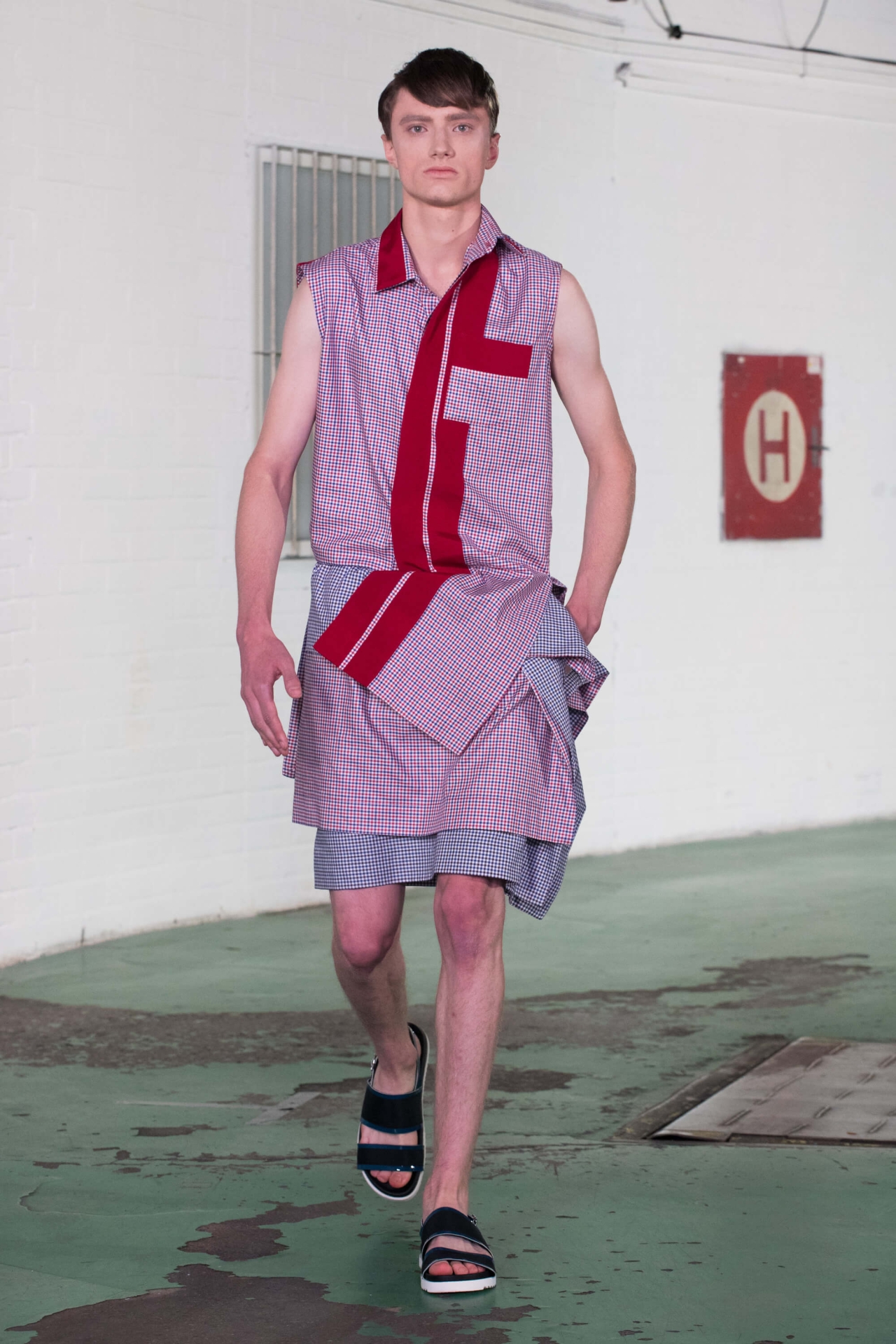
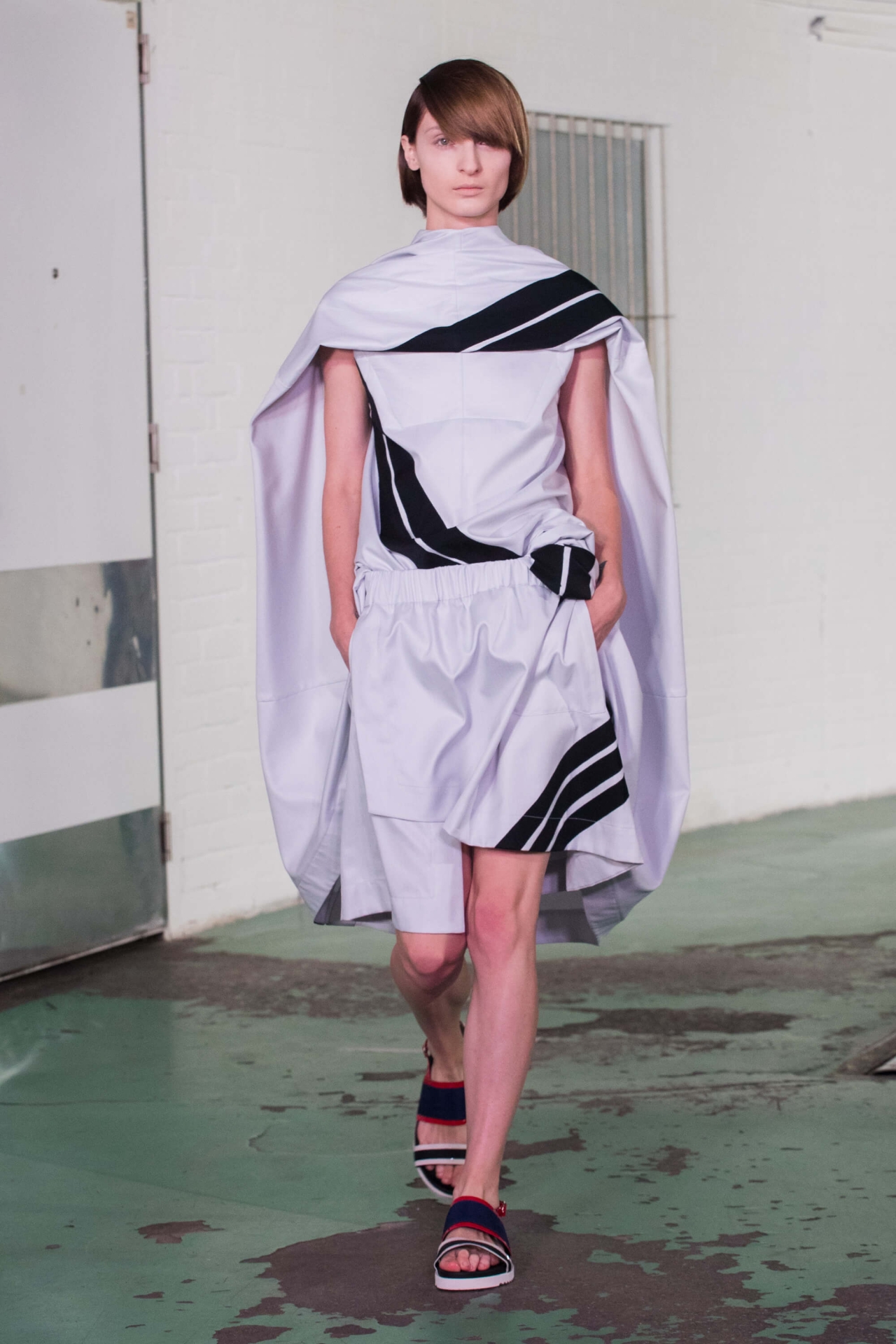
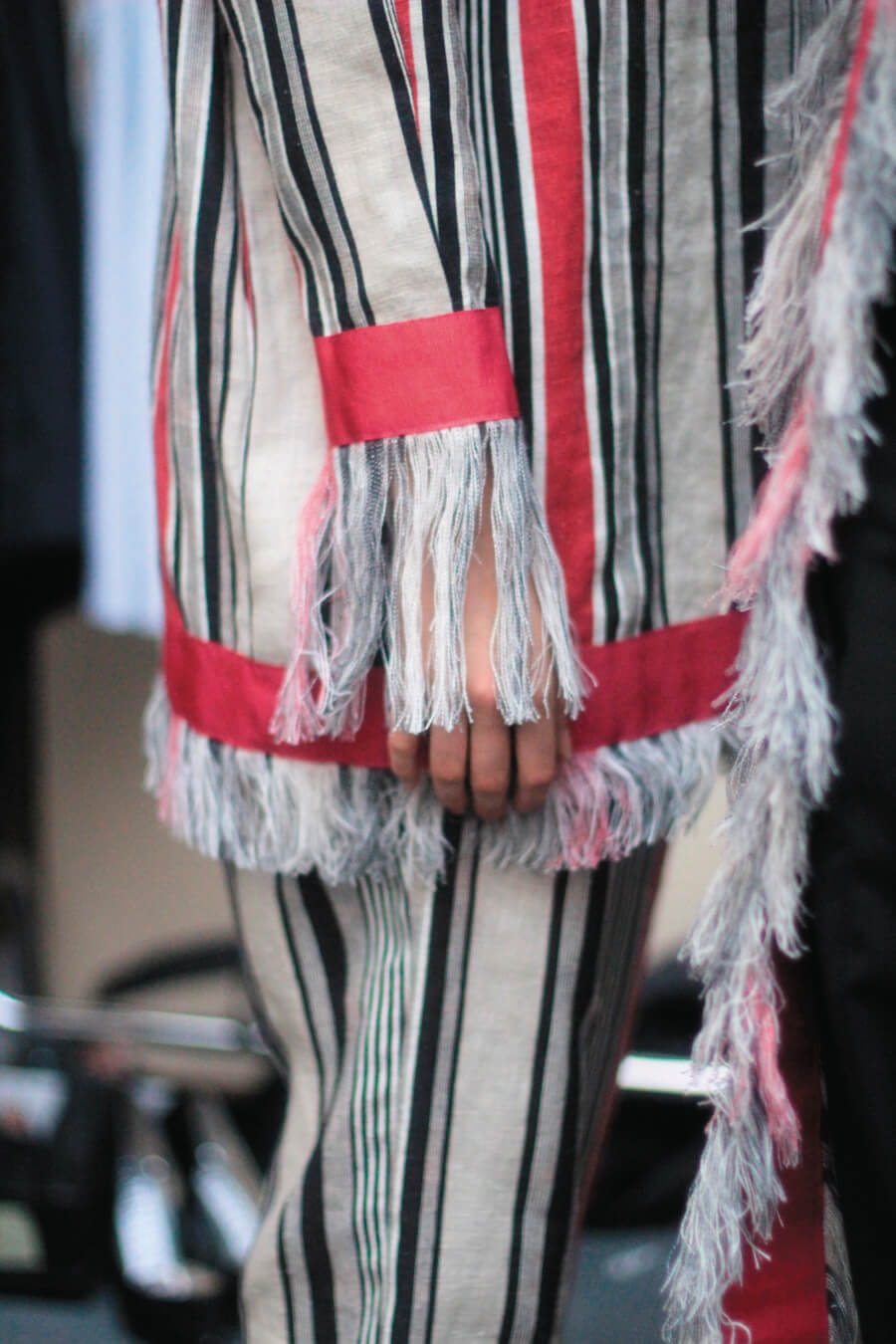
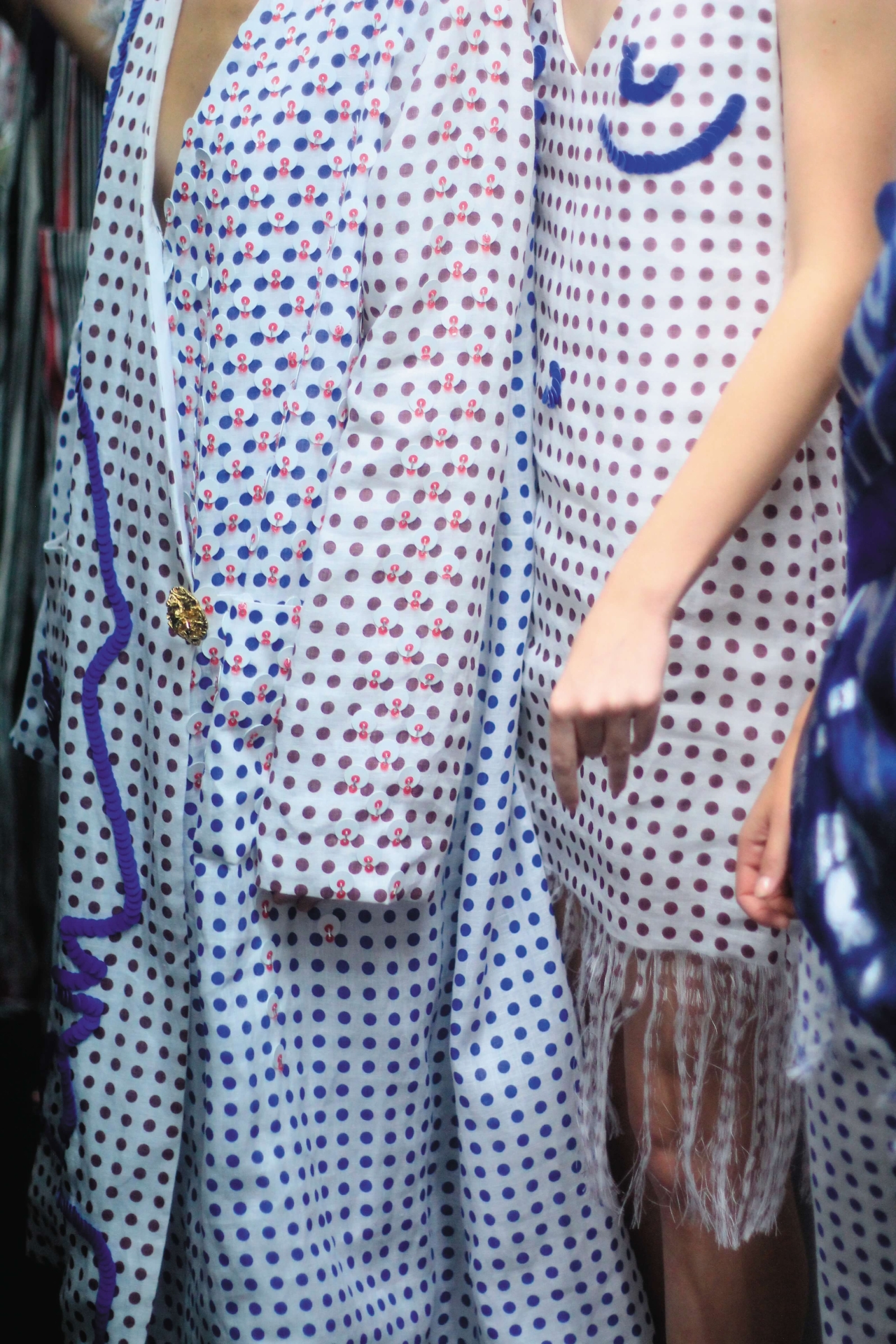
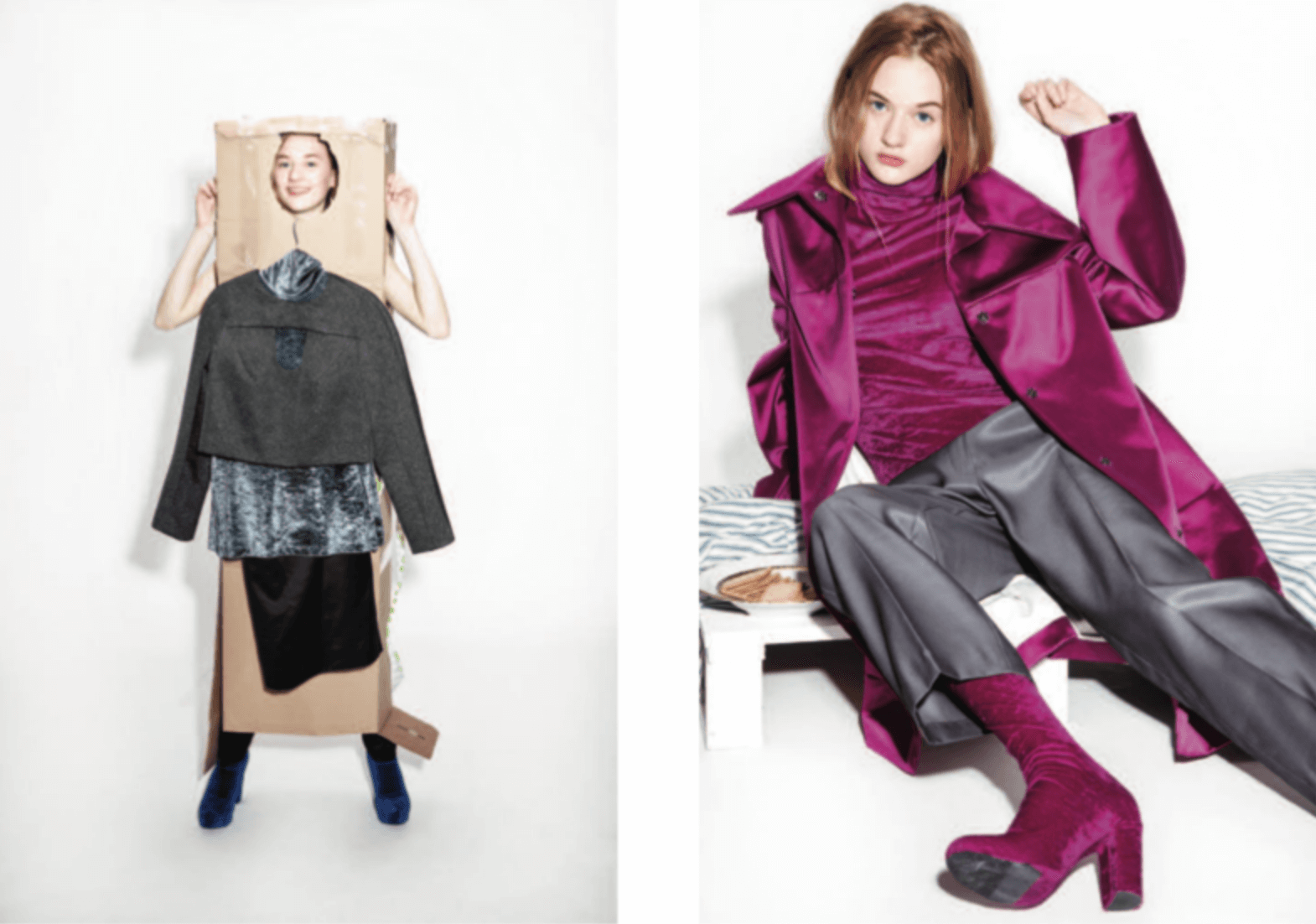
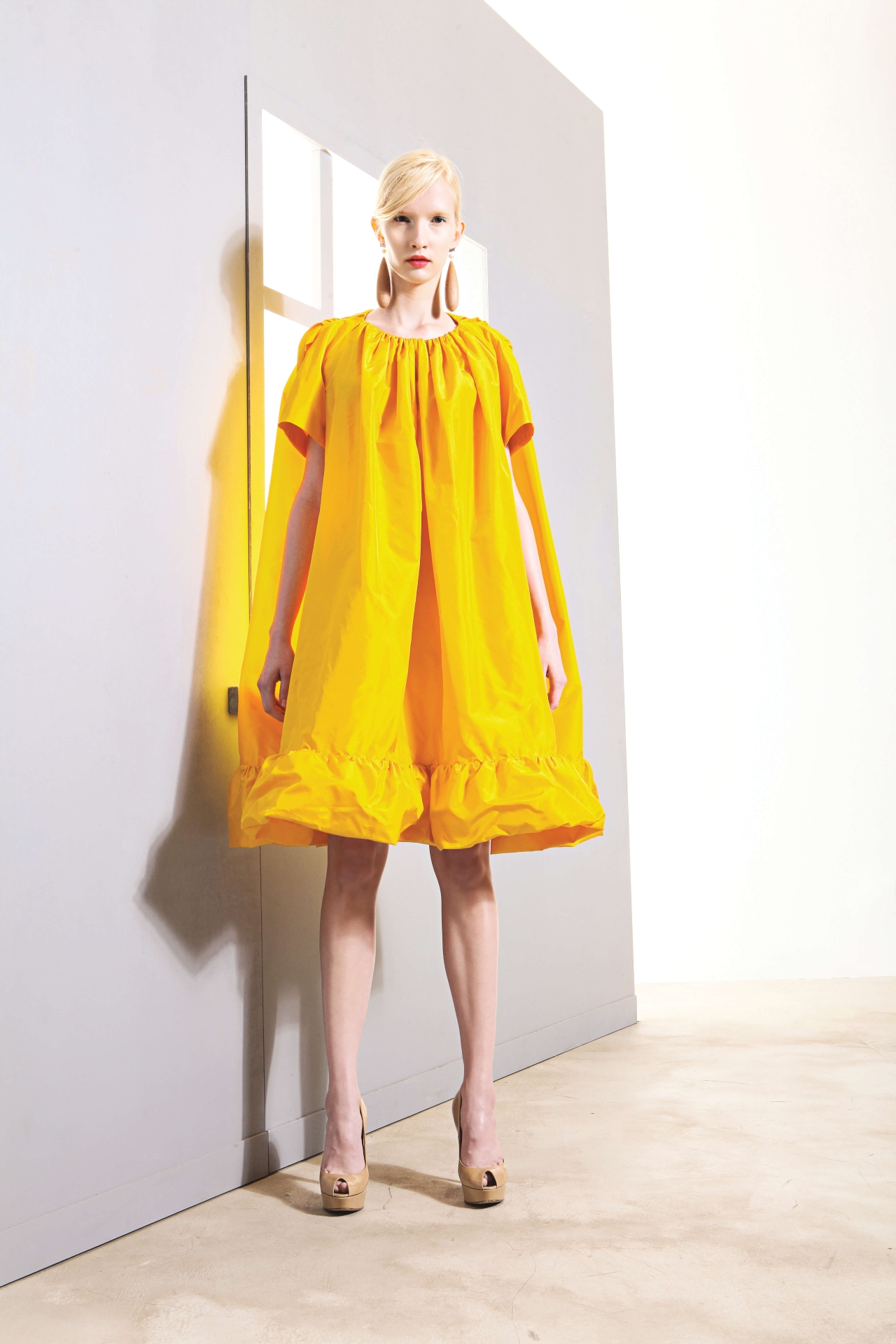
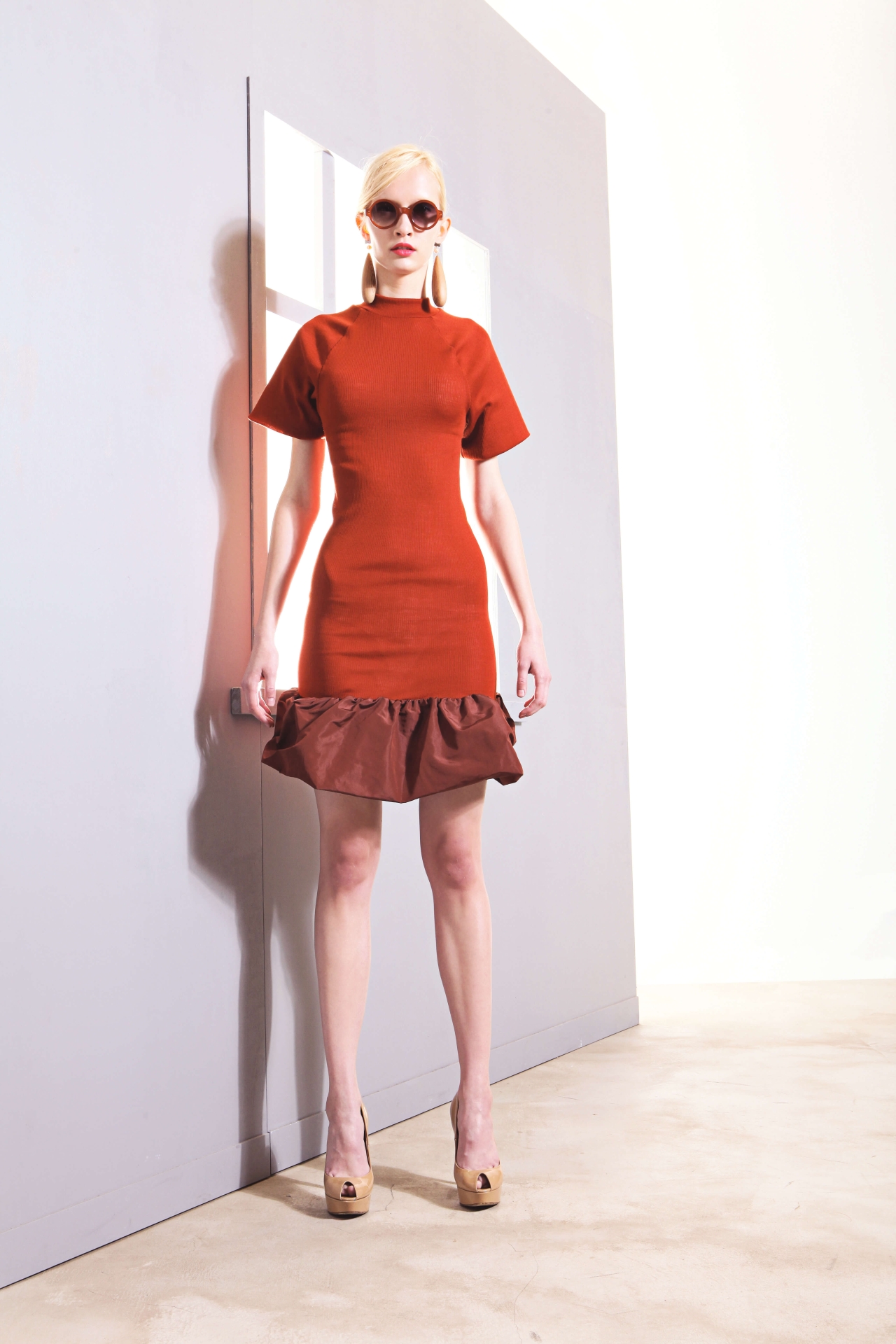
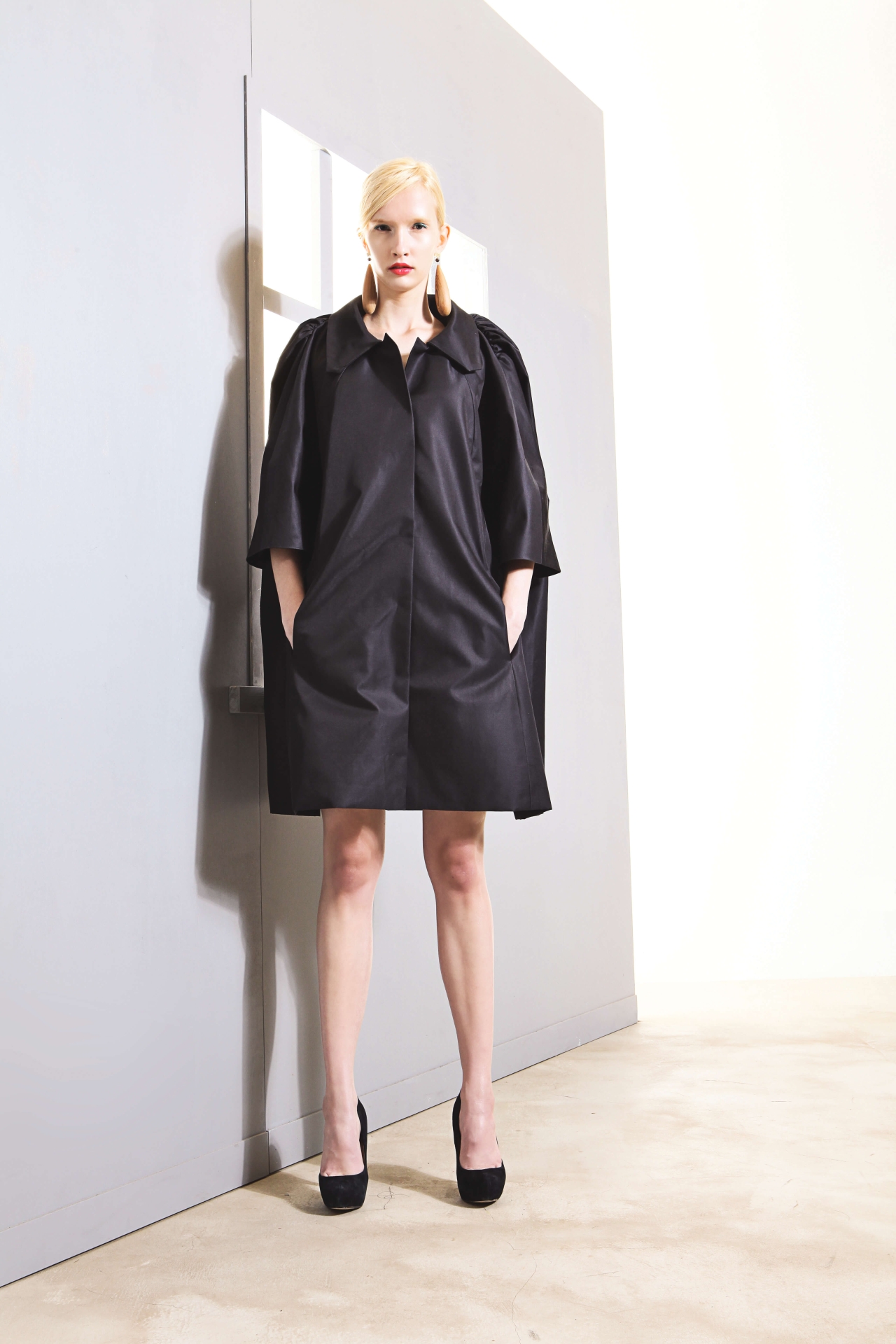
Can a boxing ring and a beach have anything in common? They definitely can. Miroslav Sabo in his collection for spring and summer 2017, however, decided to explore much more. Balancing on the edge between women's and men's ready-to-wear, he sought common intersections and emphasized them. Many models thus appeared to fall into the unisex category, although the designer would probably oppose such labeling. Unisex is a 1990s' expression, while Sabo in his approach went a bit further – blown-up shoulder volumes, asymmetrical cuts, shirting and sport stripes, banality versus cliché. Purely men's features do not look manly any more but, instead, tender; so too can a women's skirt look as if it has been doped with testosterone. Another interesting element here is the fact that the models are reversible, albeit within the strict boundaries of elegance, which is so characteristic of the designer's work.
Jan Králíček
2015 Fashion Designer of the Year
Miro Sabo
S/S 2016 collection
2013 Fashion Designer of the Year
Miro Sabo
A/W collection 2013/2014 and S/S 2014 collection
2012 3 Fashion Designer of the Year
Miro Sabo
S/S 2013 collection
“At a certain moment, I realized I was increasingly interested in the still-lifes by Dutch and Flemish master painters of the 17th century. I am not able to say why; I am probably attracted by their discreet hidden world, their association with home or the world of rich townspeople and aristocracy."
A graduate from the AAAD in Prague, Sabo later worked as an assistant in the AAAD studio led by Josef Ťapťuch. Currently, he works as a designer at Raf Simons. His prêt-à-porter spring/summer 2013 collection won the ELLE Talent Card at Designblok Premier Fashion Week last year. Superb in its classicality, yet unchained, the collection inspired by Dutch art of the 17th century, in particular by paintings featuring a typical baroque still-life and the works of Vermeer Van Delft, ranked among the most frequently quoted collections in the media last year. "The most important thing for me is that I have managed to step out of my shadow. The clothes inspired by history and art without giving a historicizing impression," says Sabo.
We use cookies on our website to give you the most relevant experience by remembering your preferences and repeat visits. By clicking “Accept”, you consent to the use of ALL the cookies. However you may visit Cookie Settings to provide a controlled consent.
This website uses cookies to improve your experience while you navigate through the website. Out of these cookies, the cookies that are categorised as necessary are stored on your browser as they are essential for the working of basic functionalities of the website. We also use third-party cookies that help us analyse and understand how you use this website. These cookies will be stored in your browser only with your consent. You also have the option to opt-out of these cookies. But opting out of some of these cookies may have an effect on your browsing experience.
Necessary
Necessary cookies are absolutely essential for the website to function properly. These cookies ensure basic functionalities and security features of the website, anonymously.
Analytics
Analytical cookies are used to understand how visitors interact with the website. These cookies help provide information on metrics the number of visitors, bounce rate, traffic source, etc.
Performance
Performance cookies are used to understand and analyse the key performance indexes of the website which helps in delivering a better user experience for the visitors.
Advertisement
Advertisement cookies are used to provide visitors with relevant ads and marketing campaigns. These cookies track visitors across websites and collect information to provide customised ads.