3
Designer of the Year
Tadeáš Podracký
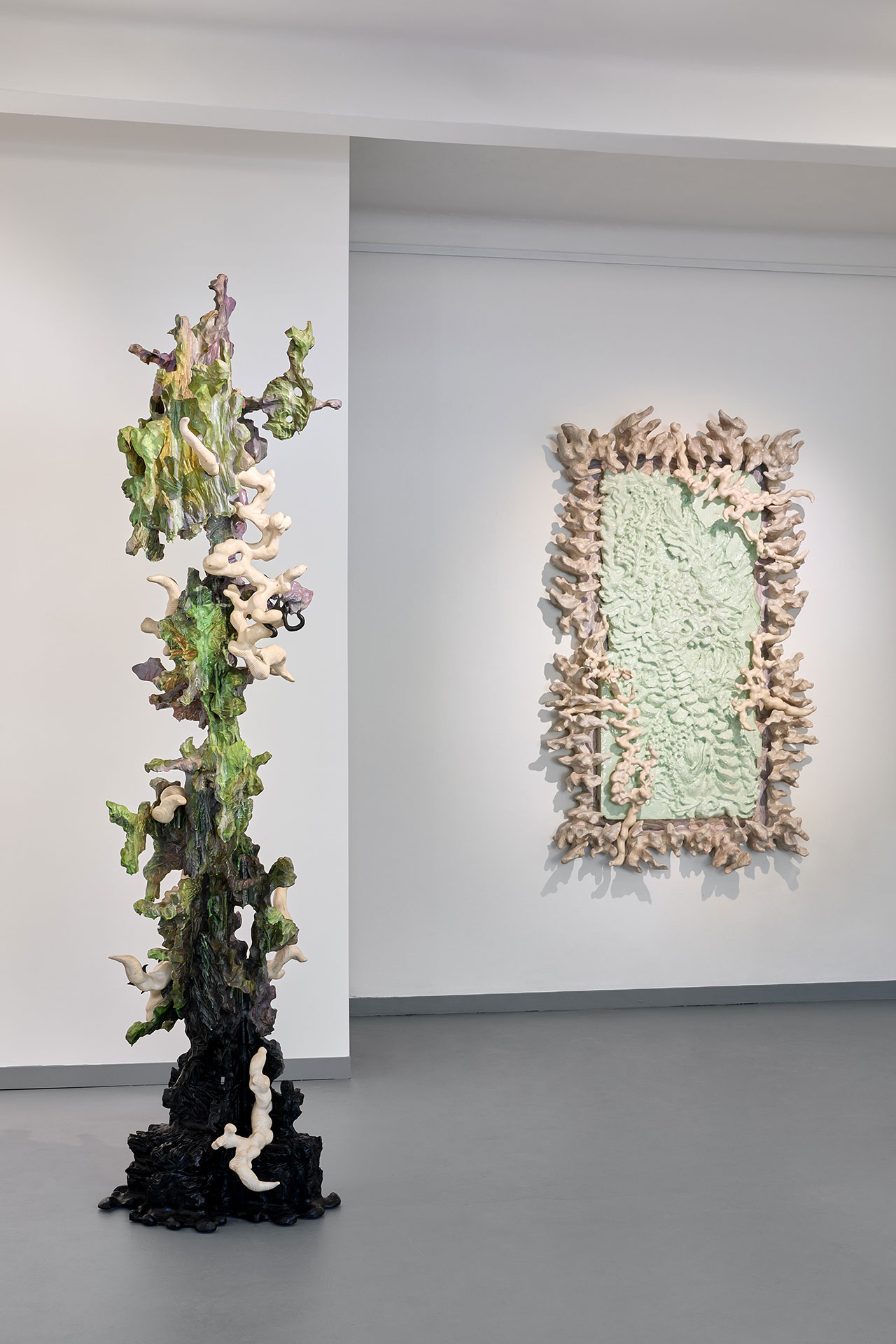
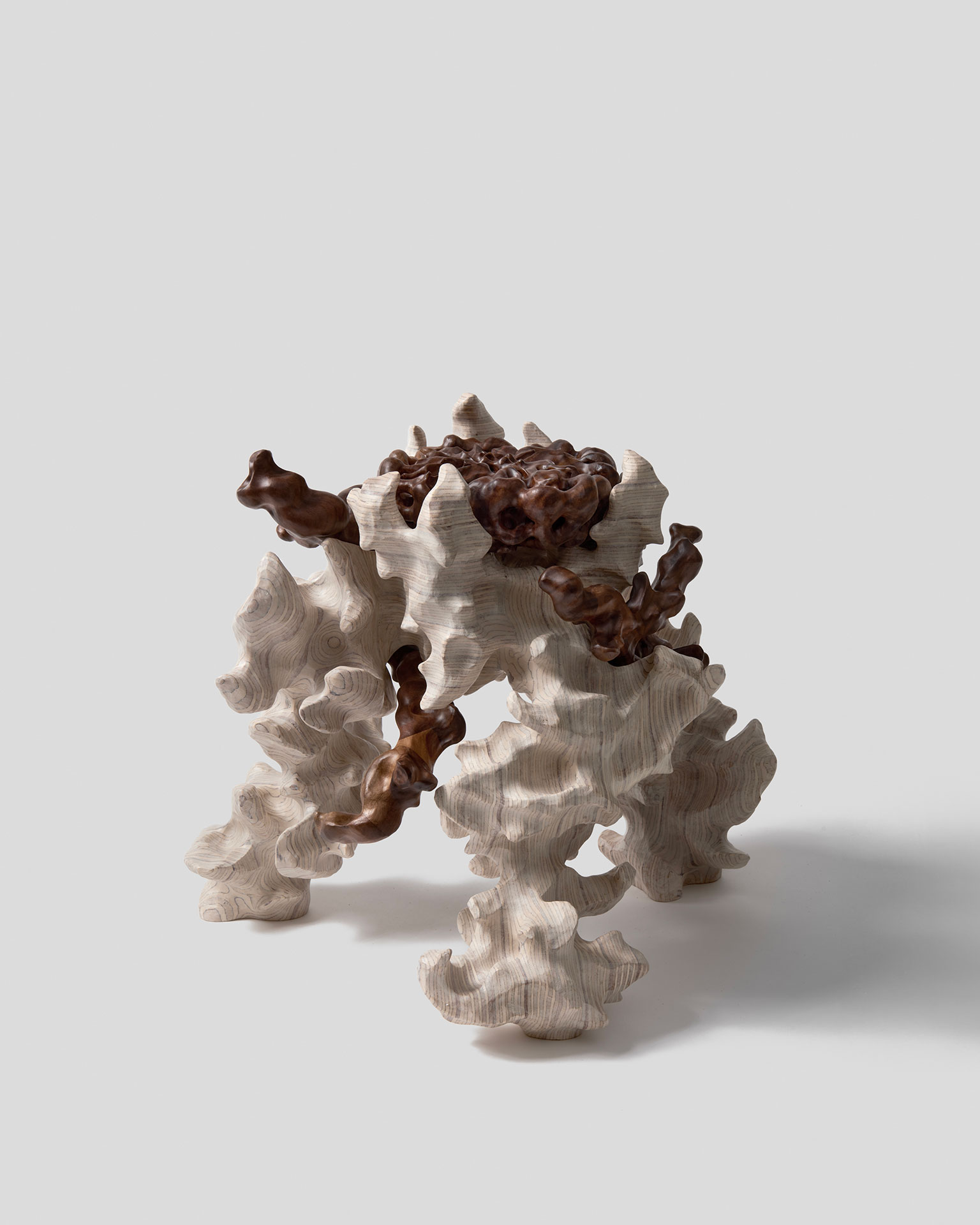
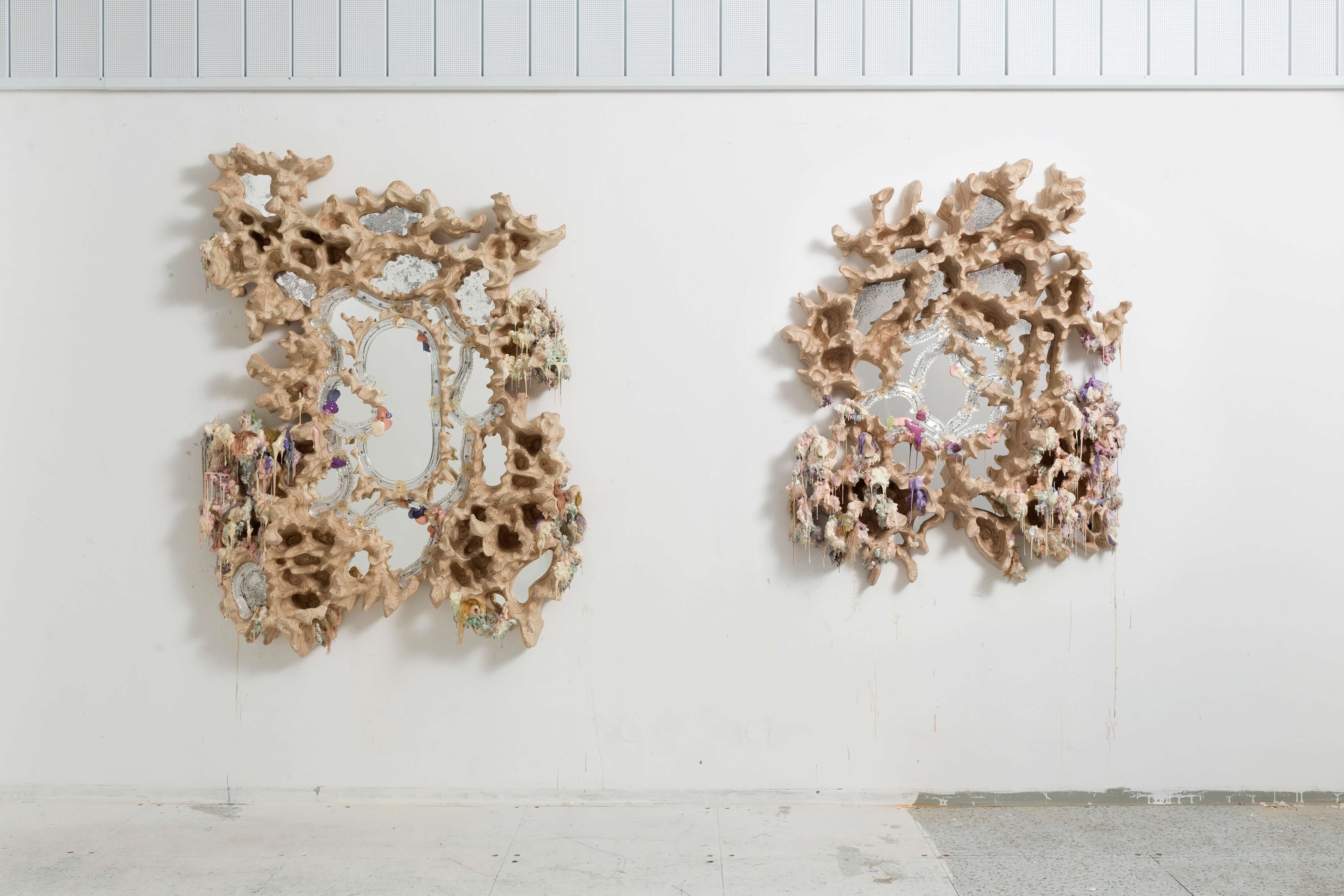
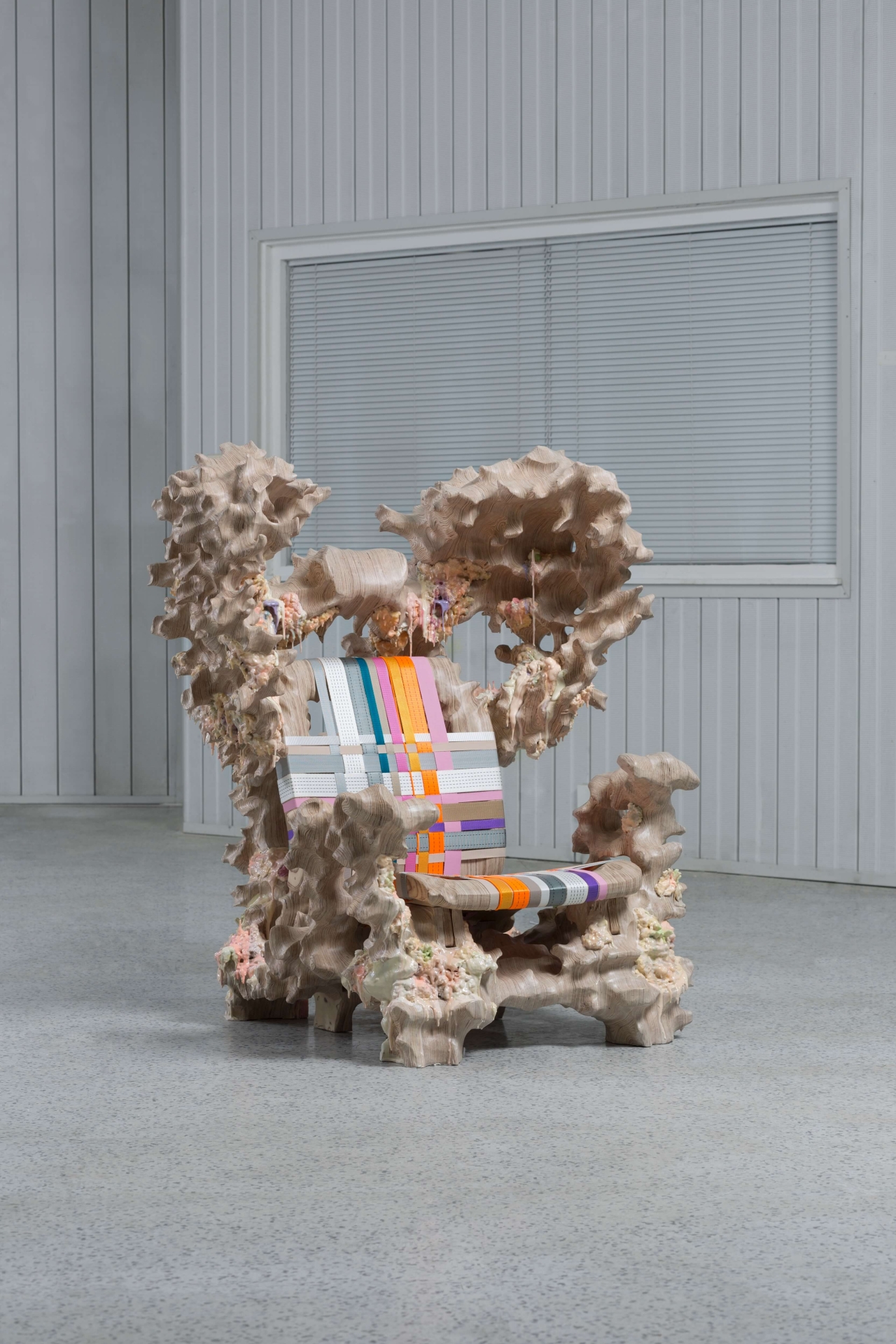
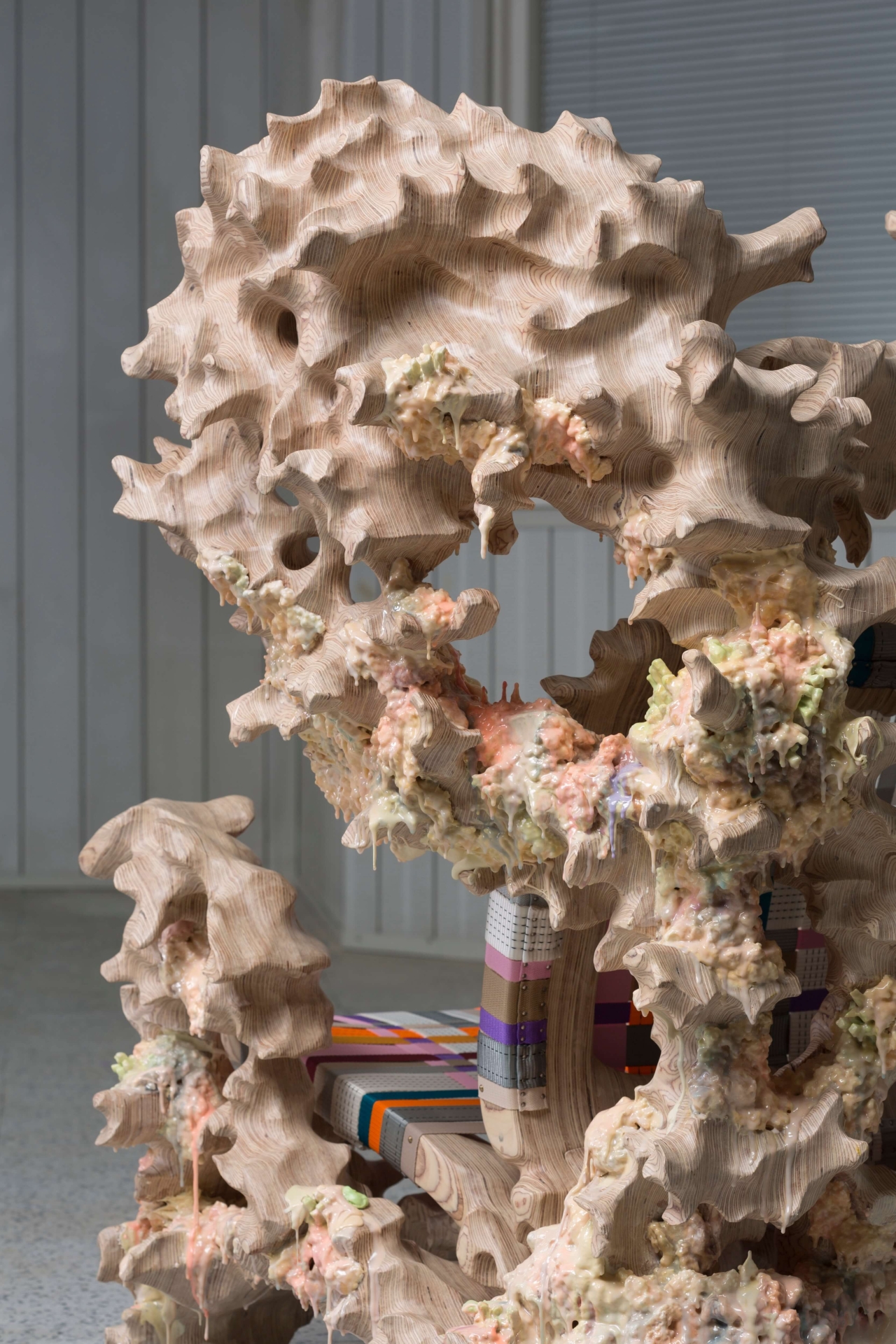
Experimental designer Tadeáš Podracký is an artist whose works you recognize at first sight. He develops his characteristic style in hand-carved wooden objects which develop the tradition of hand craft, but also critique it and move it forward. To get the final complex organism, he hand-works each curve for hours. If you only saw his works on photographs, it would be easy to mistake them for 3D generated images. The symmetrical shapes of his chairs, stools, armchairs and mirrors seem as if they were designed by a computer. The contrast between the seemingly virtual and material hand craft creates for a fascinating tension and makes the items less applied design and more a work of fine art. Their force comes into its own upon personal contact with the perfectly crafted material which begs questions about the illusions of virtual reality, the value of hand craft and its significance and role today. Podracký is not afraid to pour color over the fruits of his long work and often uses artificial materials which he combines with glass and metal.
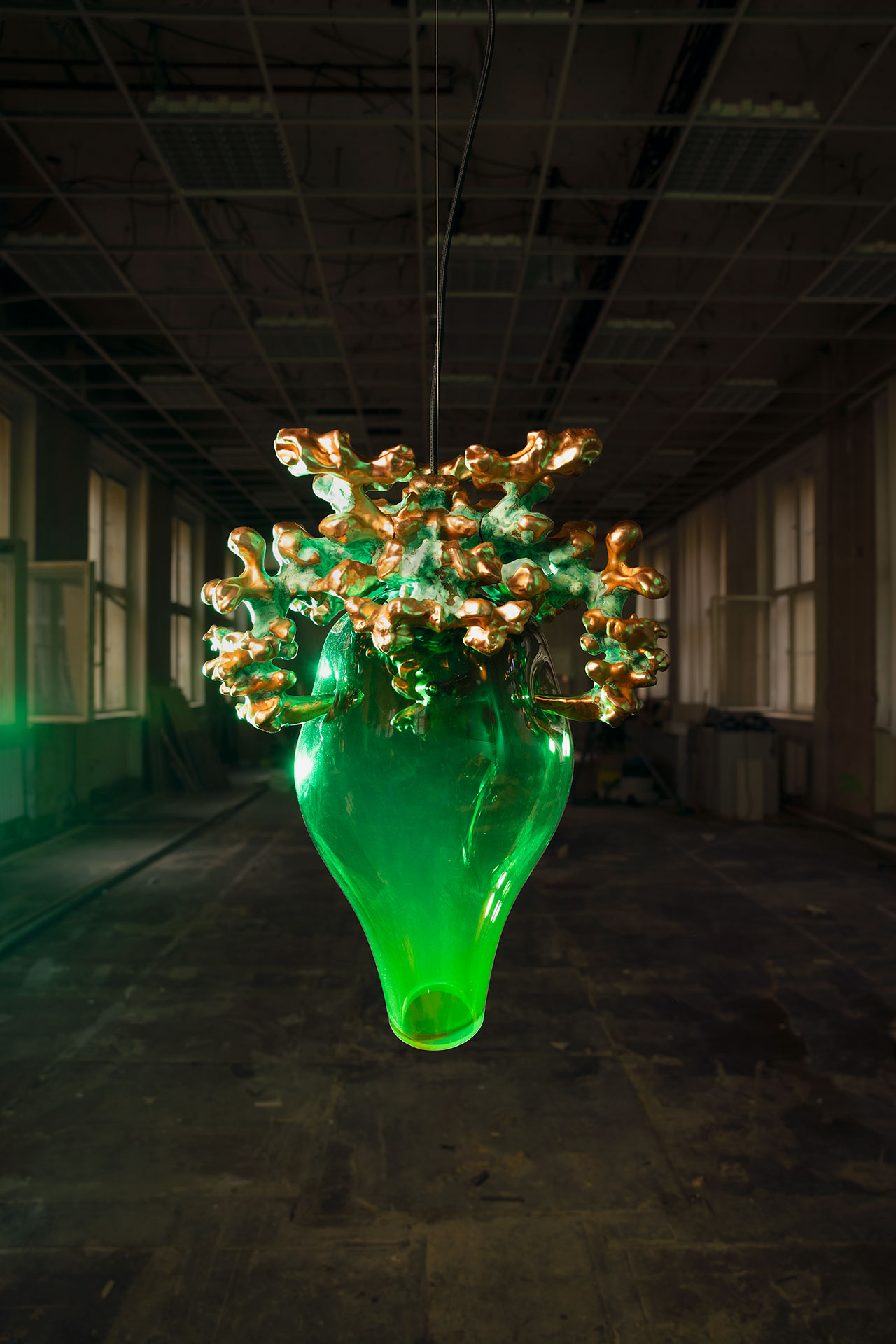
He showed the breadth of his approaches last year during his solo exhibition The Bloom of Bones, which took place in Prague’s Galerie Kuzebauch. The objects thematized modern mythologies and the cult of contemporary consumer society, and he inscribed into the works Christian themes adopted from folk culture – for example the traditional motif of Morana. He carved the symbolic figure of Death into seemingly cheap polystyrene and framed this contemporary relief into a frame made of hand-carved wood. As if saying that nothing is sacred for the contemporary person, and in the same gesture critiquing the traditional methods of fine wood carving. In later works he explored the connection between humanity and nature, wondering how objects would look if they suddenly came alive. For example his Thistle stool combines anatomic and botanic features which seem to meld naturally. Their meshing is accented by the use of two different wooden materials – the light-colored birch and the eastern black walnut. Podracký also used the concept of abiogenesis – i.e. the development of life from non-organic matter – in the work Abiogenesis he made for the Designblok Cosmos exhibition. It was his first time working with organically-shaped metal combined with uranium glass.
2023 has so far been one of the most successful years for him – apart from the two events mentioned, he also presented works at the Global Tools group exhibition in the Side Gallery in Spain, which also presented his work at the world’s foremost contemporary art convention – Design Miami. Tadeáš’s art also travelled to Paris thanks to the London-based Sarah Myerscough Gallery and he exhibited at the Venice Design Biennial, at New York’s Superhouse gallery and at Melbourne’s FIN Gallery. He also made special works for the Made by Fire exhibition in Milan, Prague and Brno, and the Ashes and Sand exhibition for the Austrian Schloss Hollenegg gallery. And starting September, him and artist Romana Drdová are heading the K.O.V. studio at the Academy of Arts, Architecture and Design in Prague.
Eva Slunečková
Karel Císař
Monika Čejková
Tereza Horváthová
Danica Kovářová
Jan Mergl
Michal Nanoru
Zuzana Sedmerová
Petra Šimůnková