Hall of Fame
Jiří Šalamoun

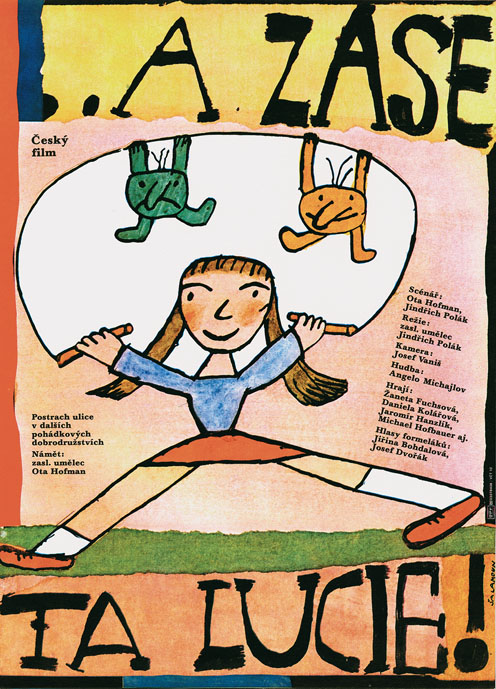
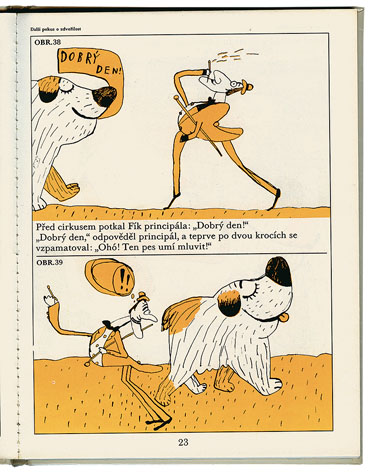
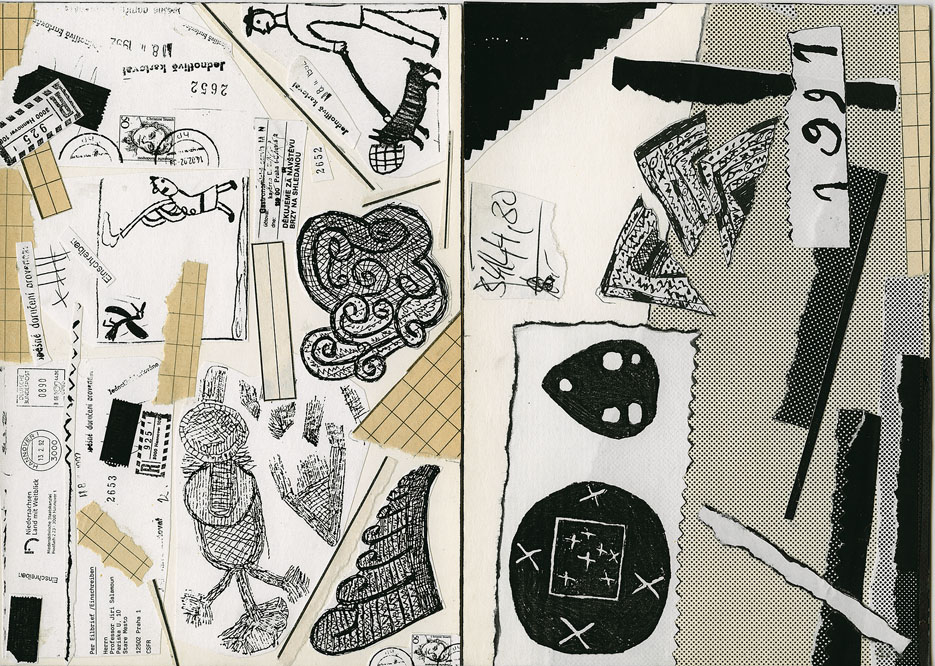
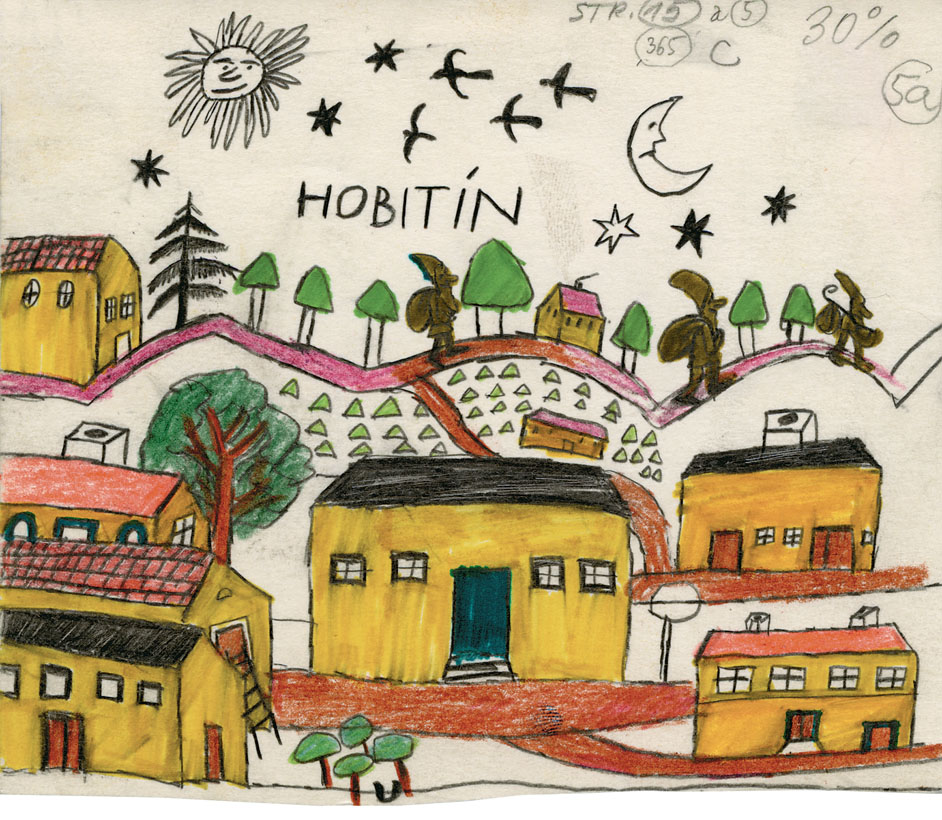
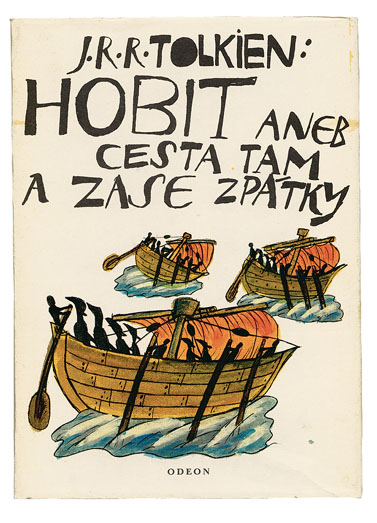
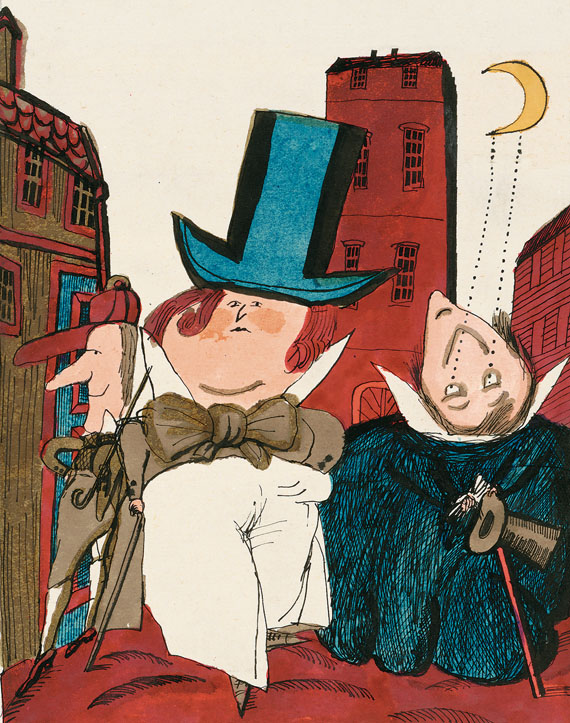
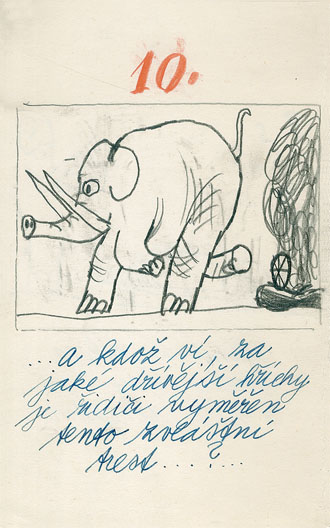
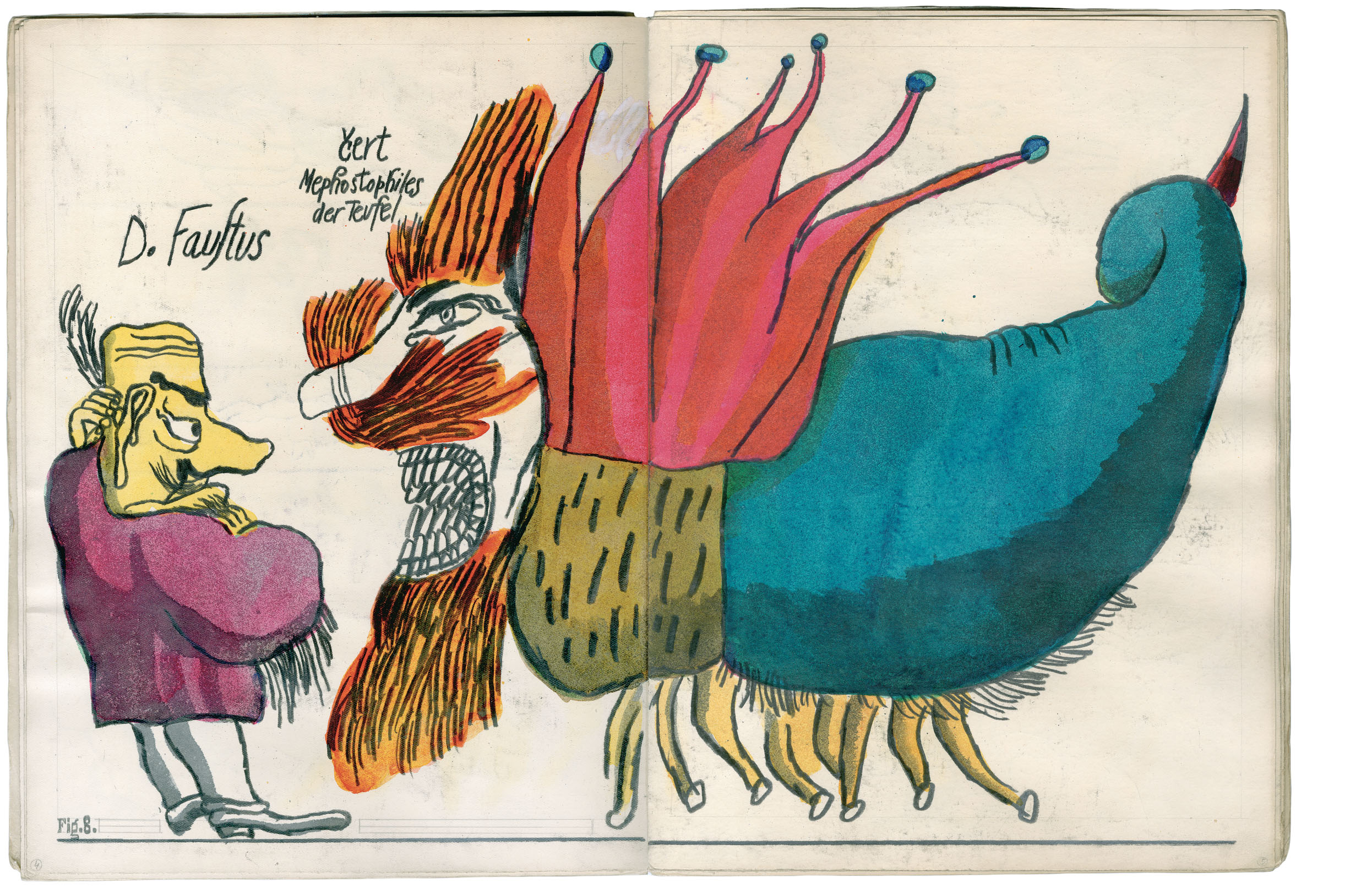
Jiří Šalamoun ranks among the most outstanding Czech illustrators of the latter half of the 20th century his drawings, characteristic of distinctive playfulness, shortcut in expression and sarcasm, decorate dozens of books. A versatile artist, he brightened up the world of children and adults alike with the characters of Fig the Maxidog and his friend Aja. Born in Prague in 1935, he loved to draw from his early childhood and his parents encouraged him in his hobby. He later graduated from graphic arts at the Academy of Fine Arts in Prague and the Academy of Graphic and Book Art in Leipzig. "I really enjoyed learning; I am quite a curious and inquiring person. Not that I would exactly complain about our Academy, but I felt that I could learn something more somewhere else,” he said in the interview for the Czech Television. He also began writing poems as an adult and regularly recording his dreams in writing. One of his most famous illustrations are those for the Tolkien's Hobbit, Saroyan's Tracy's Tiger, Brautigan's In Watermelon Sugar, The Last of the Mohicans by James Fenimore Cooper and The Pickwick Papers by Charles Dickens. He also produced graphic designs of books. In addition, his oeuvre includes countless graphic prints and posters for theater and film.
As a pedagogue, Šalamoun lectured in the United States and Europe and headed the Studio of Illustration and Graphic Art at the Prague Academy of Arts, Architecture and Design for fourteen years. And although he would never impose his way of viewing the world on anyone, students often yielded to his approach and tried to work in his style.
The illustrator Jiří Slíva, Šalamoun's long-time friend and colleague, remembers him as follows: "He graduated from two academies, speaks several languages, is educated, and yet - or because of that his drawings move on the verge of Art Brut. He always tries to see the subjects of his work as if for the first time; with the eye of a child, so to say. And this is far from being just the case of Fig the Maxidog."
Hana Slívová
During the period when all artistic fields witnessed the domination of the so-called engaged art, Jiří Šalamoun developed his original graphic style. He expresses himself with a distinct artistic shortcut, based on his philosophical cognition of reality and his peculiar, unmistakable sense of humor. His works often contain hidden allegorical, almost ironical subtext.
An intrinsic feature of Šalamoun's works has always been their international artistic crossover. He has created conspicuous and original illustrations for many books by writers from all over the world, and especially the 1970s' generation was strongly influenced by his illustrations for the first Czech edition of the Tolkien's Hobbit. This is also when his long-term cooperation with the film director Bedřich on the animated stories of Fig the Maxidog began. From the 1960s to present, he participated in numerous exhibitions and his book illustrations earned him many Czech and mainly foreign awards.
His crucial activity as a pedagogue dates to the early 1990s when he headed the Studio of Illustration and Graphic Art at the Prague Academy of Arts, Architecture and Design. There, he educated many remarkable students who have been remembering him since with much gratitude and love. Jiří Šalamoun influenced an entire generation of graphic artists and book illustrators. We wish him lots of health and energy in the many years to come!
František Kast
How to write about someone who you have never met but you constantly live surrounded and affected by him? Everybody everywhere writes how intensively design influences the surrounding world. Let me just marginally note that Jiří Šalamoun has influenced everything around us more than most of the designers rolled into one. And yet, he is the first one from the countless distinguished illustrators to enter the Hall of Fame of the Czech Design Academy. Can you hear the word "design" here, right? It might be that he himself hates it and perhaps would define it in a way, which would surprise us all. Lets get surprised, then. Would it sound like a poem? The admiration of Edward Lear, the memories of home cartoon screenings during the Second World War as well as the war itself – all this is the foundations of Šalamoun's poetics. Also, it is his graphic experiences, when he first cooperated with the magazine Aesthetic Education and then significantly influenced the Film and Time monthly. Or, do you remember those orange jackets of the Life around Us edition, in which he began increasingly proving himself as a book illustrator? He probably has been capable of thinking crosswise, and the perspective of his thinking has always been that of a large space, although he would break and suppress the very space in his drawings. There were situations when various commissions arrived simultaneously, and their subjects would thus influence each other. He lived in the space of a book; he lived inside it. The long array of books where he captured the contents and tore it out via his draughtsmanship is actually endless – just look and count how many of them you have at home. The Pickwick Papers (2 volumes), The Last of the Mohicans, Mr. Tau and a Thousand Miracles, The Hobbit, or There and Back Again, Tracy's Tiger, In Watermelon Sugar... just to name a few, but we could go on and on.
What I must finally add and have hitherto been avoiding, is FIG THE MAXIDOG! It would not be complete without him. But lets admit, Fig comes to our minds always and every time, while the previous probably do not. Writing done and over with. I am going to attack the fridge and repay myself with a Kinder bar, Fig the Maxidog edition.
If someone has stolen childhood from you, take it back, at once. Thanks in advance!
Tomáš Luňák